HomeMCPWorkbenchSkills
HomeWorkbenchNotificationsMe
llms.txt · MCP GuidePrivacy Policy · Terms of Service · Supportv1.8.3
  1. Home
  2. /Reaction

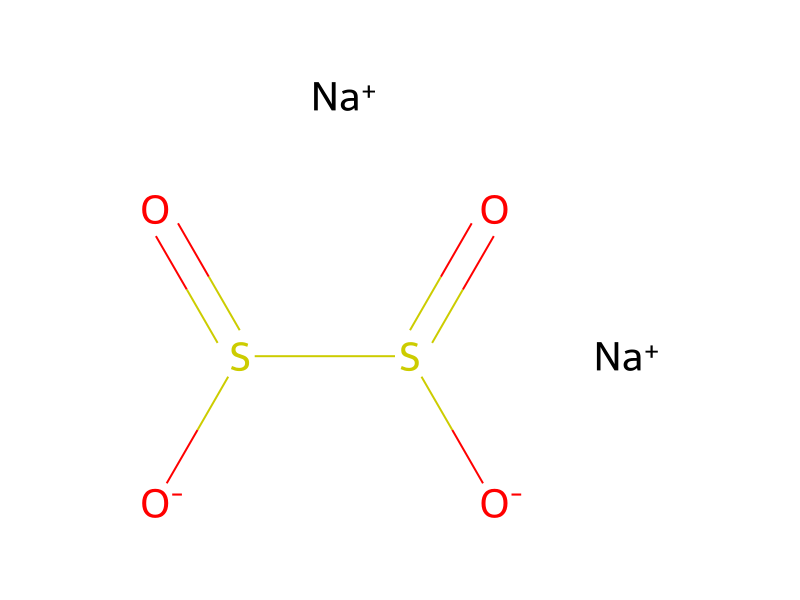
Sodium Dithionite → HCID 178419446, compound

HRID 416816
Print

Reaction equation

HRID 416816 reaction equation
[Br:1][C:2]1[C:3]([N:12]2[CH2:17][CH2:16][N:15]([CH2:18][C:19]3[CH:24]=[CH:23][N:22]=[CH:21][CH:20]=3)[CH2:14][CH2:13]2)=[C:4]([N+:9]([O-])=O)[C:5]([NH2:8])=[N:6][CH:7]=1.[N:25]1([CH2:31][CH2:32][O:33][C:34]2[CH:41]=[CH:40][C:37]([CH:38]=O)=[CH:36][CH:35]=2)[CH2:30][CH2:29][O:28][CH2:27][CH2:26]1.[O-]S(S([O-])=O)=O.[Na+].[Na+]>C(O)C>[Br:1][C:2]1[C:3]([N:12]2[CH2:17][CH2:16][N:15]([CH2:18][C:19]3[CH:24]=[CH:23][N:22]=[CH:21][CH:20]=3)[CH2:14][CH2:13]2)=[C:4]2[N:9]=[C:38]([C:37]3[CH:40]=[CH:41][C:34]([O:33][CH2:32][CH2:31][N:25]4[CH2:30][CH2:29][O:28][CH2:27][CH2:26]4)=[CH:35][CH:36]=3)[NH:8][C:5]2=[N:6][CH:7]=1
ParticipantsConditionsProcedureWorkupSources & evidenceReaction notes

Participants

5

Reactant 3

HCID 24489Sodium DithioniteHCID 37199024-(2-Morpholinoethoxy)benzaldehydeHCID 468683515-Bromo-3-nitro-4-(4-(pyridin-4-ylmethyl)piperazin-1-yl)pyridin-2-amine

Product 1

HCID 178419446HCID 178419446, compound

Reagents, catalysts & solvents 1

HCID 702EthanolSolvent2×

Conditions

Temperature
80 °C

Procedure

To a mixture of 5-bromo-3-nitro-4-(4-pyridin-4-ylmethyl-piperazin-1-yl)-pyridin-2-ylamine (0.040 g, 0.10 mmol) and EtOH (3.0 ml) was added 4-(2-morpholin-4-yl-ethoxy)-benzaldehyde (0.031 g, 0.13 mmol) with the aid of ethanol (1 ml) followed by a freshly prepared aqueous solution of Na2S2O4 (1M; 0.40 ml, 0.40 mmol). The reaction mixture was stirred at 80° C. for 20 h, then allowed to cool to room temperature and concentrated in vacuo. The resulting residue was absorbed on silica, and the free-running powder was placed on a 10 g isolute silica column. Elution with a gradient of methanol (0 to 10%) in ethyl acetate/dichloromethane (v:v; 1:1). afforded a pale yellow solid. This material was triturated with diethyl ether, and the resulting white precipitate was collected by filtration, and successively washed with diethyl ether, water, and diethyl ether, then dried in vacuo (0.014 g, 24%); 1H-NMR (500 MHz, DMSO-d6) 2.63 (br s, 4H, piperazine N(CH2)2), 2.72 (t, J=5.7 Hz, 2H, OCH2CH2N), 3.59 (t, J=4.7 Hz, 4H, morpholine O(CH2)2), 3.62, (s, 2H, NCH2-pyridyl), 3.68 (br t, 4H, piperazine N(CH2)2), 4.18 (t, J=5.8 Hz, 2H, OCH2CH2N), 7.11 (d, J=8.9 Hz, 2H) and 8.12 (d, J=8.9 Hz, 2H) (3,5-C6H4— and 2,6-C6H4—), 7.39 (d, J=5.9 Hz, 2H, pyridine 3-H, 5-H), 8.20 (s, 1H, imidazo[4,5-b]pyridine 5-H), 8.54 (d, J=5.9 Hz, 2H, pyridine 2-H, 6-H), 13.34 (br s, 1H, imidazo[4,5-b]pyridine N—H);

Workup

  1. temperatureto cool to room temperature
  2. concentrationconcentrated in vacuo
  3. customThe resulting residue was absorbed on silica
  4. washElution with a gradient of methanol (0 to 10%) in ethyl acetate/dichloromethane (v:v; 1:1)
  5. customafforded a pale yellow solid
  6. customThis material was triturated with diethyl ether
  7. filtrationthe resulting white precipitate was collected by filtration
  8. washsuccessively washed with diethyl ether, water, and diethyl ether
  9. customdried in vacuo (0.014 g, 24%)

Sources & evidence

ORD record
ord-72165114f80947b7a737da319da9578a
Source dataset
uspto-grants-2012_01
DOI
10.6084/m9.figshare.5104873.v1
Patent number
US08088761B2

Reaction notes

On this pageParticipantsConditionsProcedureWorkupSources & evidenceReaction notes