Reaction equation

[CH:1]1([OH:7])[CH2:5][CH2:4][CH2:3][CH:2]1[OH:6].B(F)(F)F.CCOCC.[CH:17]12[O:22][CH:18]1[CH2:19][CH2:20][CH2:21]2.[OH-].[Na+]>>[OH:6][CH:2]1[CH2:3][CH2:4][CH2:5][CH:1]1[O:7][CH:17]1[CH2:21][CH2:20][CH2:19][CH:18]1[OH:22]Participants




Procedure
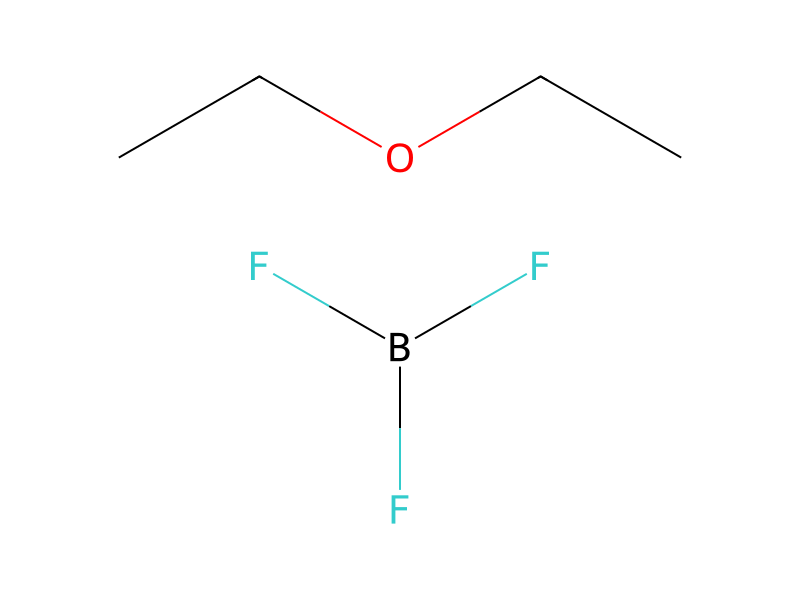
A 1-liter, three neck, round bottom flask equipped with magnetic stirrer, internal thermometer, addition funnel, condenser, argon supply, and heating mantle, is flushed with argon. Then 1,2-cyclopentanediol (about 306 g, about 3 moles, Aldrich) is added and boron trifluoride diethyl etherate (about 0.14 g, about 0.01 moles, cis-trans isomer mixture, Aldrich) is added. Then the reaction mixture is held at about 10-40° C. as cyclopentene oxide (about 84 g. about 1 mole, Aldrich) is added dropwise with stirring until all the cyclopentene oxide has reacted. The reaction mixture is neutralized with sodium hydroxide, and the liquid is fractionally distilled under vacuum to recover the excess cyclopentanediol. The desired ether is obtained as a residue. Optionally, it is purified by further vacuum distillation.
Workup
- customA 1-liter, three neck, round bottom flask equipped with magnetic stirrer
- additioninternal thermometer, addition funnel, condenser, argon supply
- temperatureheating mantle
- customis flushed with argon
- additionis added dropwise
- customhas reacted
- distillationthe liquid is fractionally distilled under vacuum
- customto recover the excess cyclopentanediol
- customThe desired ether is obtained as a residue
- distillationOptionally, it is purified by further vacuum distillation
Sources & evidence
- ORD record
- ord-291f419f49a04d96aa17aad4c2c7dd93
- Source dataset
- uspto-grants-2001_11
- Patent number
- US06323172B1
Linked notes
Loading…