Reaction equation
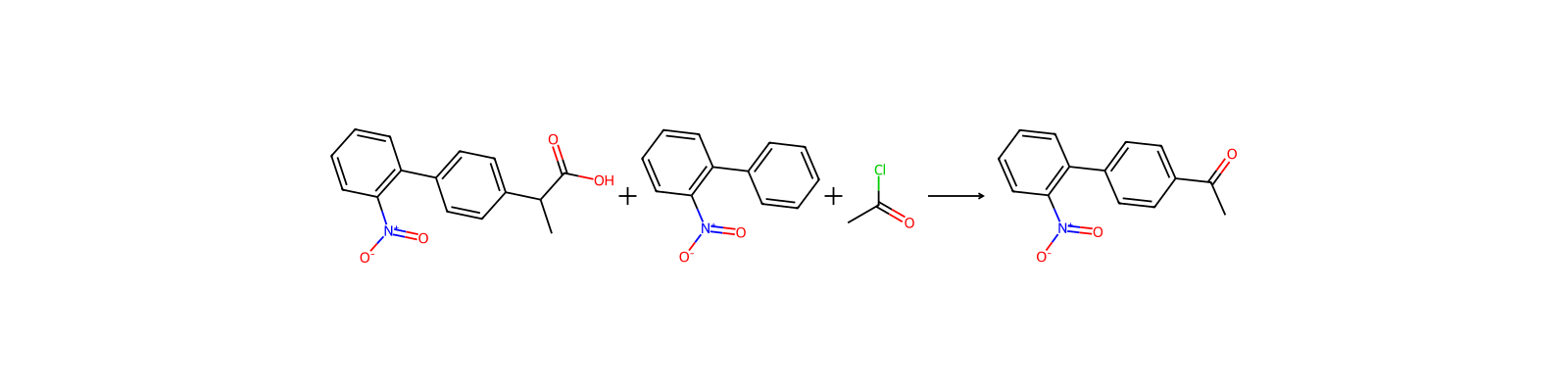
[N+:1]([C:4]1[CH:9]=[CH:8][CH:7]=[CH:6][C:5]=1[C:10]1[CH:15]=[CH:14][C:13]([CH:16]([CH3:20])C(O)=O)=[CH:12][CH:11]=1)([O-:3])=[O:2].[N+](C1C=CC=CC=1C1C=CC=CC=1)([O-])=[O:22].C(Cl)(=O)C>>[C:16]([C:13]1[CH:14]=[CH:15][C:10]([C:5]2[CH:6]=[CH:7][CH:8]=[CH:9][C:4]=2[N+:1]([O-:3])=[O:2])=[CH:11][CH:12]=1)(=[O:22])[CH3:20]Participants
4


Procedure
The 2-(2'-nitro-4-biphenylyl)propionic acid is readily prepared in the following manner: 2-nitrobiphenyl is acylated with acetyl chloride, giving 4-acetyl-2'-nitrobiphenyl. This is converted with chloroacetonitrile under alkaline conditions to the intermediate isomeric 2-methyl-2-[4-(2'-nitrophenyl)]glycidonitriles which, when treated with lithium perchlorate and then base, is isomerized to methyl 2-(2'-nitro-4-biphenylyl)propionate. Saponificiation of the latter gives the desired 2-(2'-nitro-4-biphenylyl)propionic acid. The esters are readily converted to the acid and the acid to the esters by conventional means.
Sources & evidence
- ORD record
- ord-94c36a17fa604ec8a814ff9eca73baa3
- Source dataset
- uspto-grants-1977_02
- Patent number
- US04009283
Linked notes
Loading…