Reaction equation

[OH:1][C:2]1[CH:3]=[C:4]([CH:8]=[CH:9][C:10]=1[N+:11]([O-:13])=[O:12])[C:5]([OH:7])=[O:6].[C:14](OC(=O)C)(=[O:16])[CH3:15]>N1C=CC=CC=1>[C:14]([O:1][C:2]1[CH:3]=[C:4]([CH:8]=[CH:9][C:10]=1[N+:11]([O-:13])=[O:12])[C:5]([OH:7])=[O:6])(=[O:16])[CH3:15]Participants
4
Reactant 2

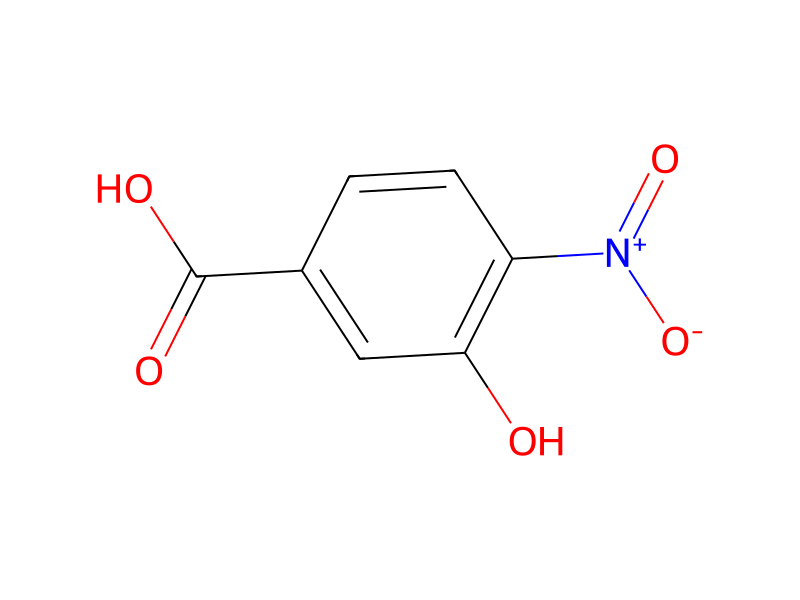
Product 1

Reagents, catalysts & solvents 1

Procedure
The 3-hydroxy-4-nitrobenzoic acid starting material is acetylated using, for instance, acetic anhydride and pyridine at reflux temperatures for 1-4 hours to afford 3-acetoxy-4-nitrobenzoic acid. This compound is then dissolved in a non-polar, aprotic solvent, such as benzene or toluene, and refluxed with thionyl chloride for a period of about 2-6 hours to form the desired 3-acetoxy-4-nitrobenzoyl chloride.
Workup
- temperatureat reflux temperatures for 1-4 hours
Sources & evidence
- ORD record
- ord-ce8d26d8c9054ebb85776972499d1316
- Source dataset
- uspto-grants-1996_05
- Patent number
- US05514676
Linked notes
Loading…