Reaction equation

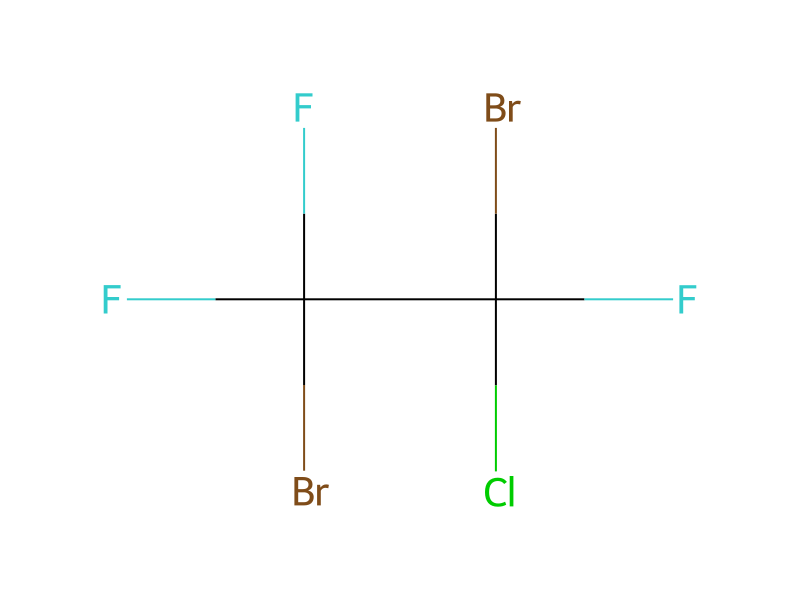
FC(=C(F)F)[CH2:3][C:4]([OH:6])=[O:5].[Cl:10][C:11]([F:17])(Br)[C:12]([F:15])([F:14])[Br:13]>[Zn]>[Br:13][C:12]([F:15])([F:14])[C:11]([Cl:10])([F:17])[CH2:3][C:4]([OH:6])=[O:5]Participants
Reactant 2
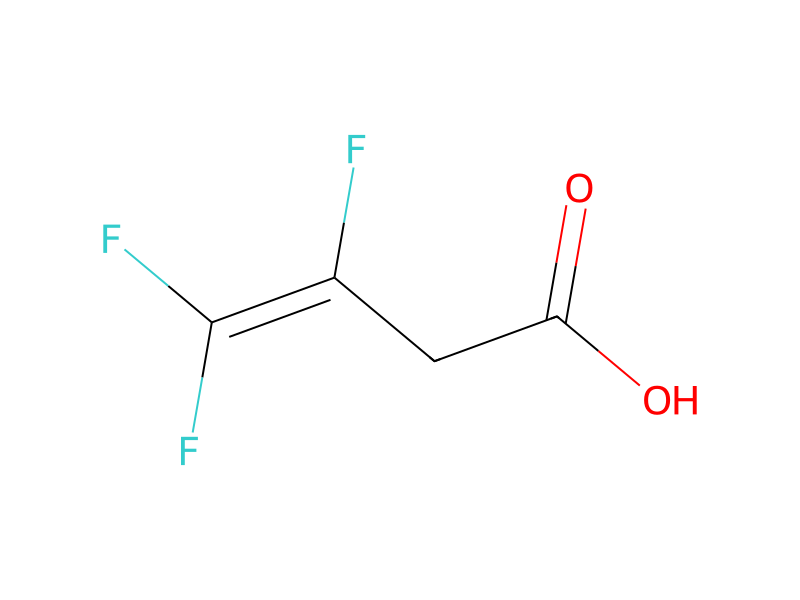
Product 1
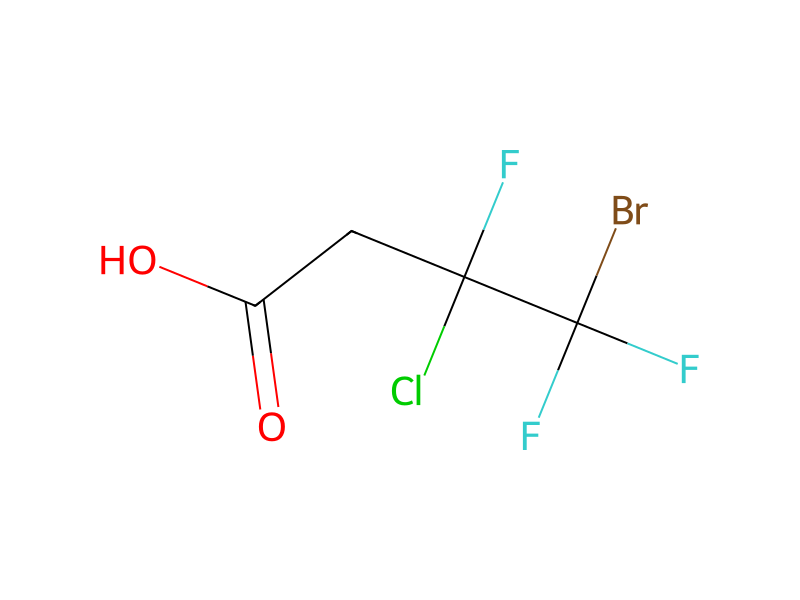
Reagents, catalysts & solvents 1

Procedure
A mixture of 1,1,2-trichlorotrifluoroethane (X) (9.37 g, 50 mmol), vinylidene chloride (4.85 g, 50 mmol), ammonium persulfate (11.41 g, 50 mmol), sodium formate (3.4 g, 50 mmol) and water (1.8 g, 0.1 mol) in DMF (80 mL.) was stirred (dry-ice/acetone condensor) at room temperature with air bubbling. After 30 min, an aliquot of the reaction mixture was acidified with dilute HCl, extracted with ether and analyzed by GC, which indicated the formation of two products. These products were identified by GC/MS (EI) as 4-chloro-3,4,4-trifluoro-2-butenoic acid and novel compound 3,4-dichloro-3,4,4-trifluorobutanoic acid (XI). The compound XI gives 3,4,4-trifluoro-3-butenoic add (IV) upon reaction with zinc. Under the above reaction conditions, 1-chloro-1,2-dibromotrifluoroethane (VI) gave 3-chloro-4-bromo-3,4,4-trifluorobutanoic acid (VIII) as one of the products.
Sources & evidence
- ORD record
- ord-d432447635c04182847b67566a7b2364
- Source dataset
- uspto-grants-1996_05
- Patent number
- US05514717
Linked notes
Loading…