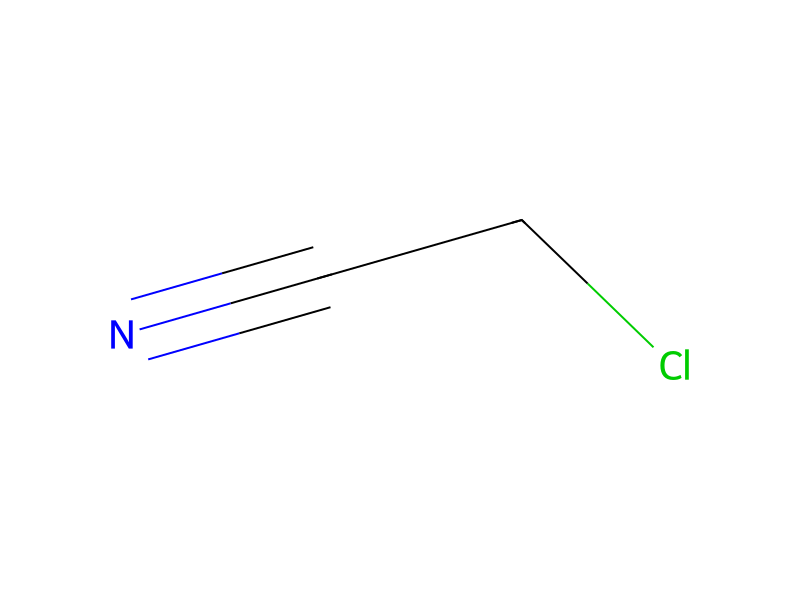
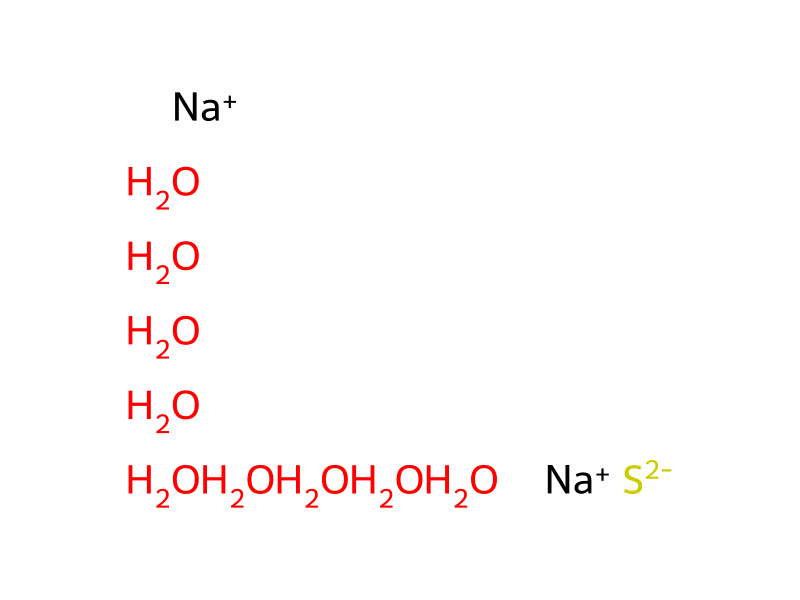
Cl[C:2]1[C:3]([N+:20]([O-:22])=[O:21])=[C:4]([C:10]([N+:17]([O-:19])=[O:18])=[CH:11][C:12]=1[C:13]([F:16])([F:15])[F:14])[N:5]([CH2:8][CH3:9])[CH2:6][CH3:7].O.O.O.O.O.O.O.O.O.[S-2:32].[Na+].[Na+].Cl[CH2:36][C:37]#[N:38]>CS(C)=O>[C:37]([CH2:36][S:32][C:2]1[C:3]([N+:20]([O-:22])=[O:21])=[C:4]([C:10]([N+:17]([O-:19])=[O:18])=[CH:11][C:12]=1[C:13]([F:16])([F:15])[F:14])[N:5]([CH2:8][CH3:9])[CH2:6][CH3:7])#[N:38]The preparation of a compound bearing a cyanomethylthio group in the 3-position is conveniently carried out using an inert solvent such as dimethylsulfoxide. Thus, a mixture of 3-chloro-N,N-diethyl-2,6-dinitro-4-trifluoromethylaniline and sodium sulfide nonahydrate in a suitable solvent such as dimethylsulfoxide is stirred for a period of time at about 0° C. There is then added chloroacetonitrile and the reaction mixture is stirred overnight at ambient room temperature. The reaction mixture is poured over ice and extracted with ether. The ether is evaporated and the residue recrystallized from a suitable solvent such as ethanol to yield in this case 3-cyanomethylthio-N,N-diethyl-2,6-dinitro-4-trifluoromethylaniline having a melting point of about 77°-79° C. The structure is confirmed by NMR spectrum.