Ammonia → 2-Amino-3-bromo-6,7-dimethylnaphthalene-1,4-dione
HRID 444229
Reaction equation

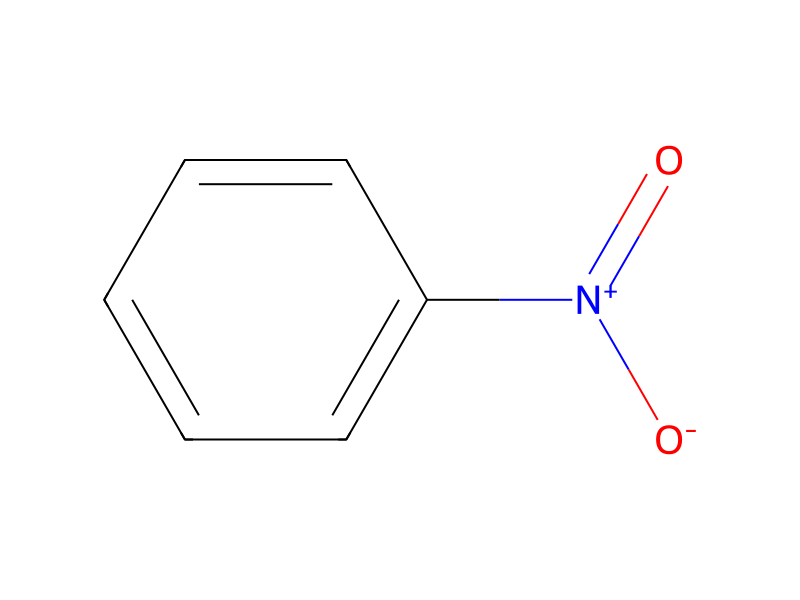
[NH3:1].[Br:2][C:3]1[C:4](=[O:17])[C:5]2[C:10]([C:11](=[O:14])[C:12]=1Br)=[CH:9][C:8]([CH3:15])=[C:7]([CH3:16])[CH:6]=2>[N+](C1C=CC=CC=1)([O-])=O>[NH2:1][C:12]1[C:11](=[O:14])[C:10]2[C:5]([C:4](=[O:17])[C:3]=1[Br:2])=[CH:6][C:7]([CH3:16])=[C:8]([CH3:15])[CH:9]=2Participants
4
Reactant 2


Product 1

Reagents, catalysts & solvents 1
Procedure
Dry ammonia was passed through a refluxing solution of 2,3-dibromo-6,7-dimethyl-1,4-naphthoquinone (10 g; mp 237°-238° C.) in dry nitrobenzene (65 ml) for 30 mins. and the orange solid which separated on cooling was filtered off and washed with light petroleum. After removal of ammonium bromide with water, 6.96 g. (86%) of material of mp 228° C. was obtained. Recrystallisation from glacial acetic acid gave analytically pure material of the same melting point. ν max(mull) 3400, 3300, 1680, 1610, 1585, 1570 cm-1. δ(DMSO) 2.35 (6H,s); 7.35 (2H, exchangeable broad singlet); 7.74 (2H,s). (Found; C, 51.50; H, 3.38; N, 4.79; C12H10BrNO2 requires; C, 51.45; H, 3.60; N, 5.00%).