HomeMCPWorkbenchSkills
HomeWorkbenchNotificationsMe
llms.txt · MCP GuidePrivacy Policy · Terms of Service · Supportv1.8.0
  1. Home
  2. /Reaction

1,3-Diethyl 2-oxopropanedioate → Ethyl 6,7-dichloro-3-hydroxyquinoxaline-2-carboxylate

HRID 444434
Notes
Print preview

Reaction equation

HRID 444434 reaction equation
[Cl:1][C:2]1[C:7]([Cl:8])=[CH:6][C:5]([NH2:9])=[C:4]([NH2:10])[CH:3]=1.O=[C:12]([C:18](OCC)=[O:19])[C:13]([O:15][CH2:16][CH3:17])=[O:14]>C(O)C>[Cl:1][C:2]1[CH:3]=[C:4]2[C:5](=[CH:6][C:7]=1[Cl:8])[N:9]=[C:12]([C:13]([O:15][CH2:16][CH3:17])=[O:14])[C:18](=[O:19])[NH:10]2
ParticipantsProcedureWorkupSources & evidenceReaction notes

Participants

4

Reactant 2

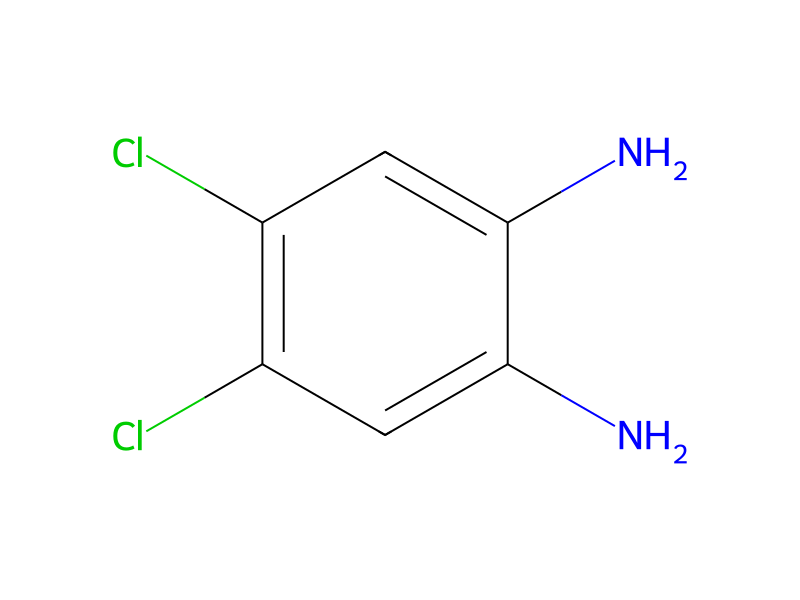
HCID 691051,3-Diethyl 2-oxopropanedioateHCID 792974,5-Dichloro-1,2-phenylenediamine

Product 1

HCID 6320212Ethyl 6,7-dichloro-3-hydroxyquinoxaline-2-carboxylate

Reagents, catalysts & solvents 1

HCID 702EthanolSolvent

Procedure

A solution of 17.7 g. of 4,5-dichloro-o-phenylenediamine and 200 ml. of anhydrous ethanol was prepared. A 17.4 g. batch of diethyl 2-keto-malonate was added to this solution and the mixture was heated to refluxing temperature for about 17 hours. The volatile constituents were removed by evaporation in vacuo. Recrystallization of the residue from ethanol yielded 20 g. of ethyl 6,7-dichloro-3,4-dihydro-3-oxo-2-quinoxaline carboxylate formed in the above reaction; melting in the range of 226°-227° C.

Workup

  1. temperaturethe mixture was heated
  2. temperatureto refluxing temperature for about 17 hours
  3. customThe volatile constituents were removed by evaporation in vacuo
  4. customRecrystallization of the residue from ethanol
  5. customyielded 20 g

Sources & evidence

ORD record
ord-4ec45609c786485ab0ff3d6fa777e208
Source dataset
uspto-grants-1981_04
DOI
10.6084/m9.figshare.5104873.v1
Patent number
US04264600

Reaction notes

Loading…

On this pageParticipantsProcedureWorkupSources & evidenceReaction notes