Reaction equation

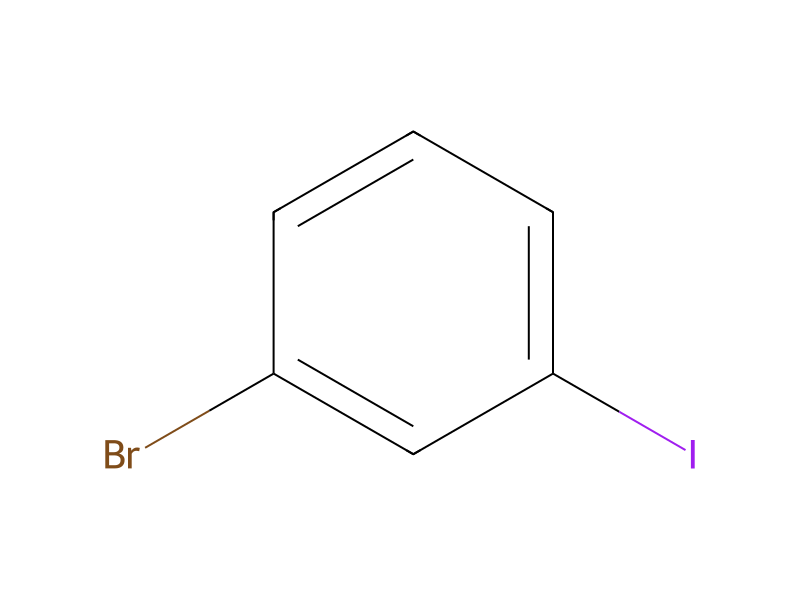
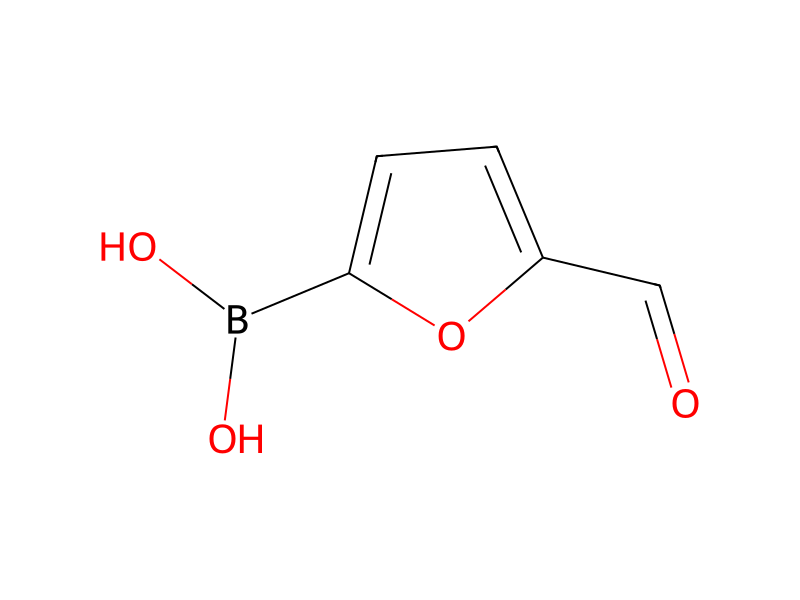
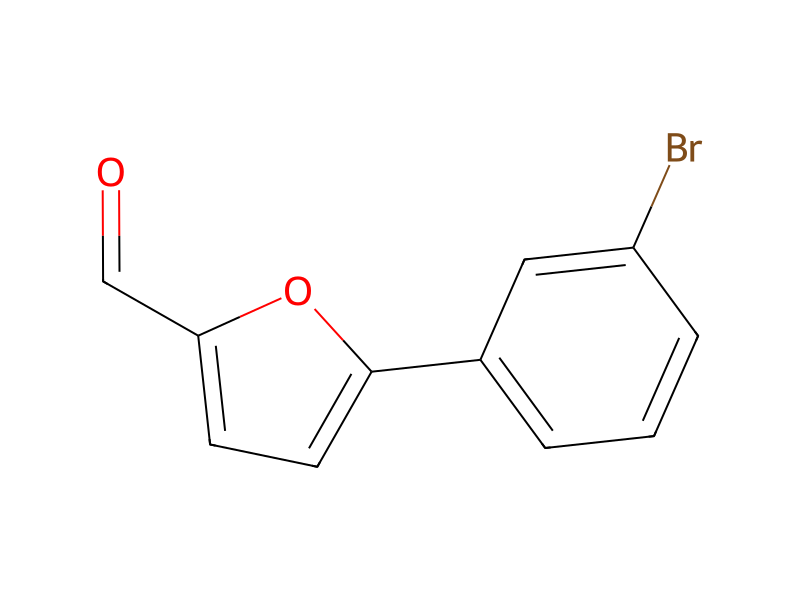
[CH:1]([C:3]1[O:7][C:6](B(O)O)=[CH:5][CH:4]=1)=[O:2].[Br:11][C:12]1[CH:13]=[C:14](I)[CH:15]=[CH:16][CH:17]=1.C(=O)([O-])[O-].[Na+].[Na+].O>COCCOC.C1C=CC([P]([Pd]([P](C2C=CC=CC=2)(C2C=CC=CC=2)C2C=CC=CC=2)([P](C2C=CC=CC=2)(C2C=CC=CC=2)C2C=CC=CC=2)[P](C2C=CC=CC=2)(C2C=CC=CC=2)C2C=CC=CC=2)(C2C=CC=CC=2)C2C=CC=CC=2)=CC=1>[Br:11][C:12]1[CH:17]=[C:16]([C:6]2[O:7][C:3]([CH:1]=[O:2])=[CH:4][CH:5]=2)[CH:15]=[CH:14][CH:13]=1Participants




Procedure
5-Formyl-2-furanboronic acid (676 mg, 4.8 mmol) and 3-bromoiodobenzene (1132 mg, 4 mmol) were dissolved in 1,2-dimethoxyethane (30 mL), tetrakis(triphenylphosphine)palladium (228 mg, 0.2 mmol) was added thereto, 2 mol/L sodium carbonate (9.6 mL) was further added thereto, and the mixture was heated to reflux for 2 hours while stirring. After the reaction was completed water (20 mL) was added thereto, and extraction with ethyl acetate (20 mL×2) was carried out. The organic layer was washed with saturated brine, water was removed using anhydrous sodium sulfate, the solvent was then removed by evaporation under reduced pressure, and the residue was subjected to silica gel column chromatography using ethyl acetate/hexane (3/7 (volume ratio)) as an eluent, to give 5-(3-bromophenyl)furan-2-carbaldehyde in a yield of 306 mg (yield 25.9%).
Workup
- temperaturethe mixture was heated
- temperatureto reflux for 2 hours
- additionwas added
- extractionextraction with ethyl acetate (20 mL×2)
- washThe organic layer was washed with saturated brine, water
- customwas removed
- customthe solvent was then removed by evaporation under reduced pressure
Sources & evidence
- ORD record
- ord-5e7c749d4a9446d4a9a263f8c69dd32d
- Source dataset
- uspto-grants-2013_07
- Patent number
- US08476449B2
Linked notes
Loading…