Reaction equation

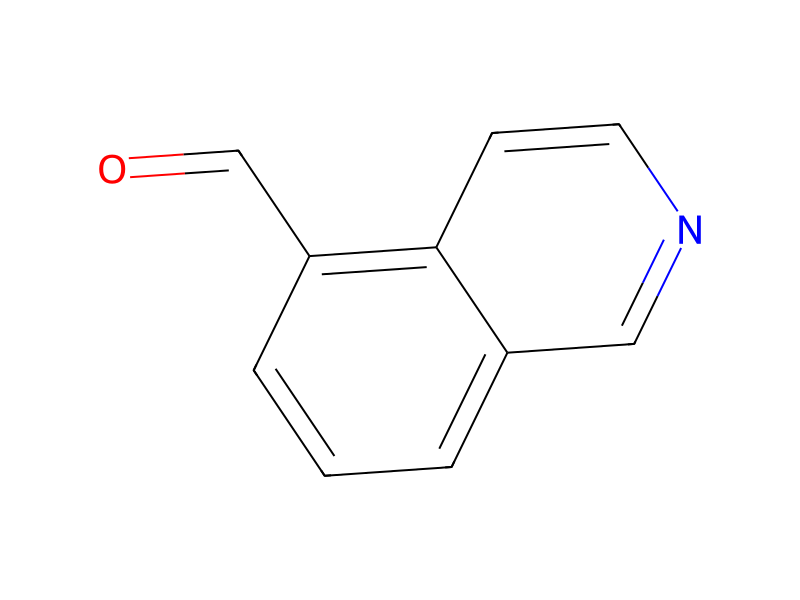
[CH:1]1([C:7]2[CH:12]=[CH:11][C:10]([CH:13]3[CH2:15][CH:14]3[C:16]([NH:18][NH2:19])=[O:17])=[CH:9][CH:8]=2)[CH2:6][CH2:5][CH2:4][CH2:3][CH2:2]1.[CH:20]1[C:29]2[CH:28]=[CH:27][CH:26]=[C:25]([CH:30]=O)[C:24]=2[CH:23]=[CH:22][N:21]=1.C(O)(=O)C>C(O)C>[CH:1]1([C:7]2[CH:8]=[CH:9][C:10]([CH:13]3[CH2:15][CH:14]3[C:16]([NH:18]/[N:19]=[CH:30]/[C:25]3[CH:26]=[CH:27][CH:28]=[C:29]4[C:24]=3[CH:23]=[CH:22][N:21]=[CH:20]4)=[O:17])=[CH:11][CH:12]=2)[CH2:2][CH2:3][CH2:4][CH2:5][CH2:6]1Participants
Reactant 3


Product 1

Reagents, catalysts & solvents 1

Conditions
- Temperature
- 80 °C
Procedure
To a room temperature solution of 2-(4-cyclohexylphenyl)cyclopropanecarbohydrazide (200 mg) in ethanol (20 mL), was added isoquinoline-5-carbaldehyde (122 mg, 0.77 mmol) and acetic acid (0.5 mL). The reaction mixture was then heated at 80° C. for 3 h, concentrated in vacuo and the residue diluted with water and extracted with EtOAc (2×20 mL). The layers were separated and then the combined organic layers were washed with a saturated NaHCO3 solution, dried over magnesium sulfate, filtered and concentrated in vacuo to obtain the crude product. The crude material was purified via column chromatography eluting with 2% MeOH in dichloromethane to afford (E)-2-(4-cyclohexylphenyl)-N′-(isoquinolin-5-ylmethylene)cyclopropanecarbohydrazide (100 mg, 33%) as a white solid.
Workup
- concentrationconcentrated in vacuo
- additionthe residue diluted with water
- extractionextracted with EtOAc (2×20 mL)
- customThe layers were separated
- washthe combined organic layers were washed with a saturated NaHCO3 solution
- dry with materialdried over magnesium sulfate
- filtrationfiltered
- concentrationconcentrated in vacuo
- customto obtain the crude product
- customThe crude material was purified via column chromatography
- washeluting with 2% MeOH in dichloromethane
Sources & evidence
- ORD record
- ord-30f36dbb74014371aea12e360eb5eb25
- Source dataset
- uspto-grants-2013_07
- Patent number
- US08481532B2
Linked notes
Loading…