Bromopinacolone → 2-(4-Allyl-1-piperazinyl)-4-tert.butyl-thiazole
Reaction equation

[CH2:1]([N:4]1[CH2:9][CH2:8][N:7]([C:10]([NH2:12])=[S:11])[CH2:6][CH2:5]1)[CH:2]=[CH2:3].[CH3:13][C:14]([C:17]([CH2:19]Br)=O)([CH3:16])[CH3:15]>C(O)C>[CH2:1]([N:4]1[CH2:9][CH2:8][N:7]([C:10]2[S:11][CH:19]=[C:17]([C:14]([CH3:16])([CH3:15])[CH3:13])[N:12]=2)[CH2:6][CH2:5]1)[CH:2]=[CH2:3]Participants
4
Reactant 2
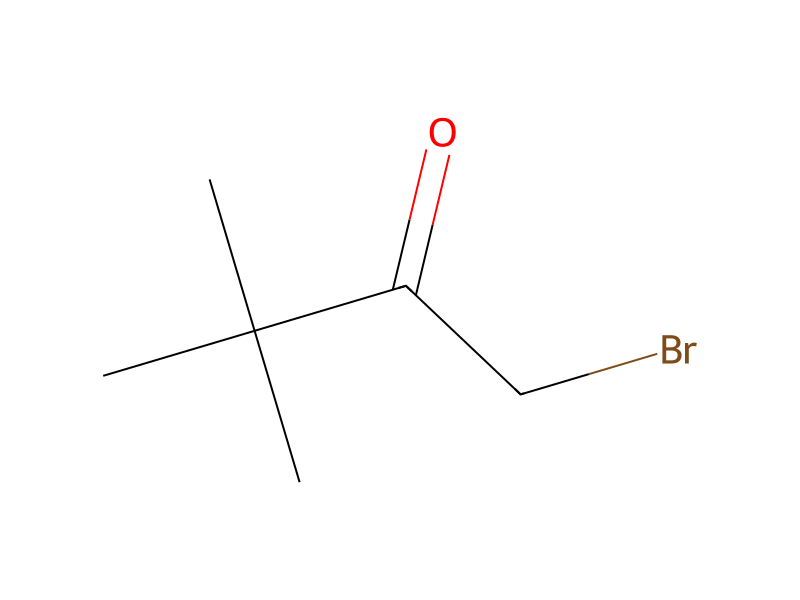

Product 1

Reagents, catalysts & solvents 1

Procedure
3.7 g of 4-allyl-1-piperazinyl-thiocarboxamide are added to a solution of 3.6 g of bromopinacoline in 40 cc of ethanol, and the reaction mixture is subsequently heated to the boil at reflux for 2 hours. The mixture is subsequently concentrated by evaporation in a vacuum, the residue is dissolved in a small amount of water and divided between ether and a concentrated aqueous sodium hydroxide solution. The ether phase is washed with water, dried over sodium sulphate and saturated with hydrogen chloride gas after filtration. The monohydrochloride of 2-(4-allyl-1-piperazinyl)-4-tert.butyl-thiazole crystallizes and has an M.P. of 212°-214° after recrystallization from ethanol/diisopropyl ether.