Reaction equation
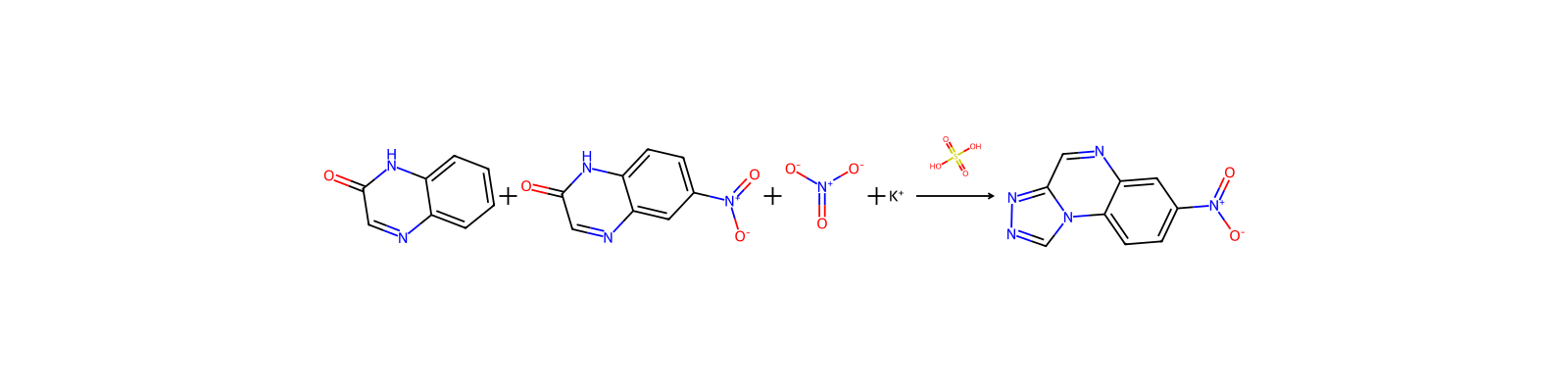
[NH:1]1[C:10]2C(=CC=CC=2)N=CC1=O.[N+:12]([C:15]1[CH:16]=[C:17]2[C:22](=[CH:23][CH:24]=1)[NH:21][C:20](=O)[CH:19]=[N:18]2)([O-:14])=[O:13].[N+:26]([O-])([O-])=O.[K+]>OS(O)(=O)=O>[N+:12]([C:15]1[CH:16]=[C:17]2[C:22](=[CH:23][CH:24]=1)[N:21]1[CH:10]=[N:1][N:26]=[C:20]1[CH:19]=[N:18]2)([O-:14])=[O:13]Participants
5
Reactant 3

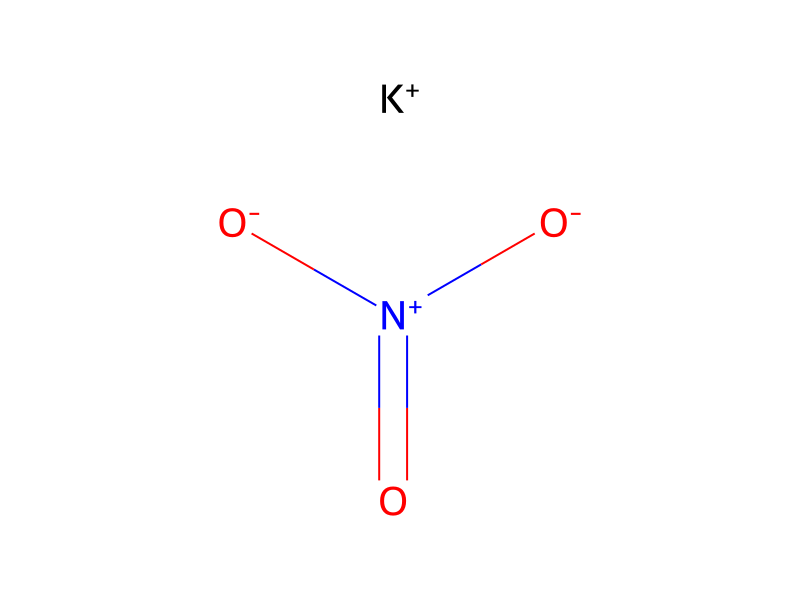

Product 1

Reagents, catalysts & solvents 1

Procedure
The procedure of Example I.D. was followed except the quinoxalin-2-one was converted to the 6-nitroquinoxalin-2-one by first dissolving in conc. H2SO4 and cooling in an ice bath, and adding KNO3 in 3 portions. The product was collected by conventional technique and subsequently converted to 2-hydrazino-6-nitroquinoxaline. This compound was reacted with triethylorthoformate as per Example I.D., yielding 7-nitro-1,2,4-triazolo[4,3-a]quinoxaline (16).
Workup
- temperaturecooling in an ice bath
- customThe product was collected by conventional technique
Sources & evidence
- ORD record
- ord-761e282b1c9f48be85ab9368316d359b
- Source dataset
- uspto-grants-1992_10
- Patent number
- US05153196
Linked notes
Loading…