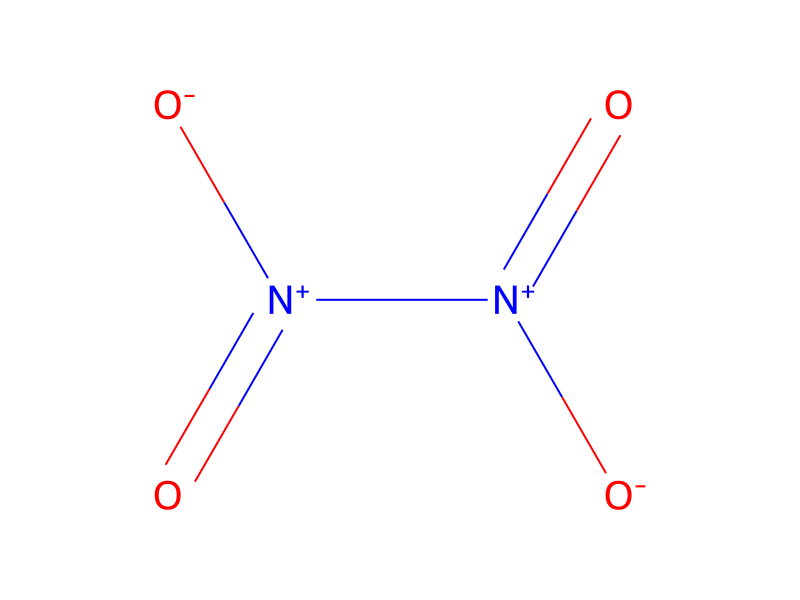
Br[C:2]1[O:3][C:4]2[CH:16]=[C:15]3[O:17][CH2:18][O:19][C:14]3=[CH:13][C:5]=2[C:6]=1[C:7]1[CH:12]=[CH:11][CH:10]=[CH:9][CH:8]=1.C(O)(=O)C.C1CCC(C(O)=O)CC=1.[N+:33]([O-:38])([N+]([O-])=O)=[O:34]>O>[CH2:18]1[O:17][C:15]2=[CH:16][C:4]3[O:3][C:2]([N+:33]([O-:38])=[O:34])=[C:6]([C:7]4[CH:12]=[CH:11][CH:10]=[CH:9][CH:8]=4)[C:5]=3[CH:13]=[C:14]2[O:19]1To a solution of 5.2 g. (0.016 mole) of 2-bromo-5,6-methylenedioxy-3-phenylbenzofuran in 225 ml. of acetic acid is added with stirring 5.0 g. (0.024 mole) of cyclohexene-4-carboxylic acid, then 2.2 g. (0.024 mole) of dinitrogen tetraoxide in 25 ml. of acetic acid. After about one hour the mixture is poured into cold water, and the yellow product is collected and washed with water. The product is dissolved in dichloromethane, and the solution is washed with cold 5 percent sodium hydroxide solution, water and saturated sodium chloride solution, then dried. The solution is concentrated to dryness to provide a yellow residue which is recrystallized from a benzene-hexane mixture, then from an isopropanol-benzene mixture to provide yellow needles of 5,6-methylenedioxy-2-nitro-3-phenylbenzofuran, m.p. 180°-183° C.
Loading…