Reaction equation

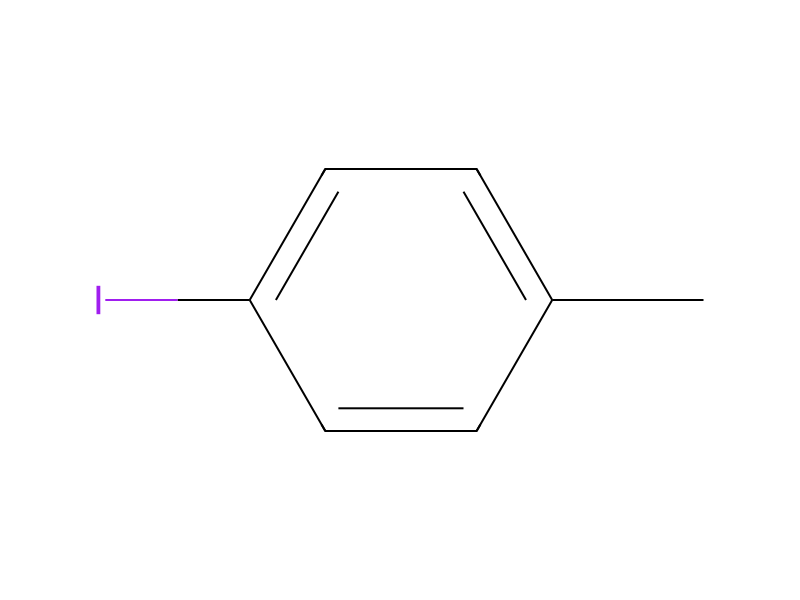
I[C:2]1[CH:3]=[C:4]([CH:9]=[CH:10][CH:11]=1)[C:5]([O:7][CH3:8])=[O:6].I[C:13]1[CH:18]=[CH:17][C:16]([CH3:19])=[CH:15][CH:14]=1>[Cu]>[CH3:19][C:16]1[CH:17]=[CH:18][C:13]([C:2]2[CH:11]=[CH:10][CH:9]=[C:4]([C:5]([O:7][CH3:8])=[O:6])[CH:3]=2)=[CH:14][CH:15]=1Participants
Reactant 2

Product 1

Reagents, catalysts & solvents 1

Procedure
To a stirred solution of 25.2 g of methyl 3-iodobenzoate and 21.0 g of 4-iodotoluene at 180°-190° under nitrogen was added 30.3 g of copper powder portionwise over 1 hour. When approximately one-third of the copper had been added, the reaction initiated and the temperature increased spontaneously to 240°. The mixture was allowed to cool to 210°, then was held at 210° during the addition of the remaining copper and for an additional hour. The mixture was allowed to cool to room temperature and was filtered employing benzene as solvent; the resulting filtrate was concentrated in vacuum to provide the crude product. Column chromatography on silica gel (elution=50-100% benzene/hexane) followed by distillation furnished 7.60 g of methyl 4'-methylbiphenyl-3-carboxylate [bp: 114°-115° C. (0.025 torr)] as a colorless oil; NMR (200 MHz, CDCl3): δ 8.27 (br S, 1H); 7.99 (d, 1H); 7.77 (d, 1H); 7.50 (t, 1H); 7.39 (A2B2, 4H); 3.94 (s, 3H); 2.41 (s, 3H).
Workup
- temperaturethe temperature increased spontaneously to 240°
- temperatureto cool to 210°
- filtrationwas filtered
- concentrationthe resulting filtrate was concentrated in vacuum
- customto provide the crude product
- distillationColumn chromatography on silica gel (elution=50-100% benzene/hexane) followed by distillation
Sources & evidence
- ORD record
- ord-3246a7f8f8a2404c81842d5aa97fab84
- Source dataset
- uspto-grants-1992_10
- Patent number
- US05155118
Linked notes
Loading…