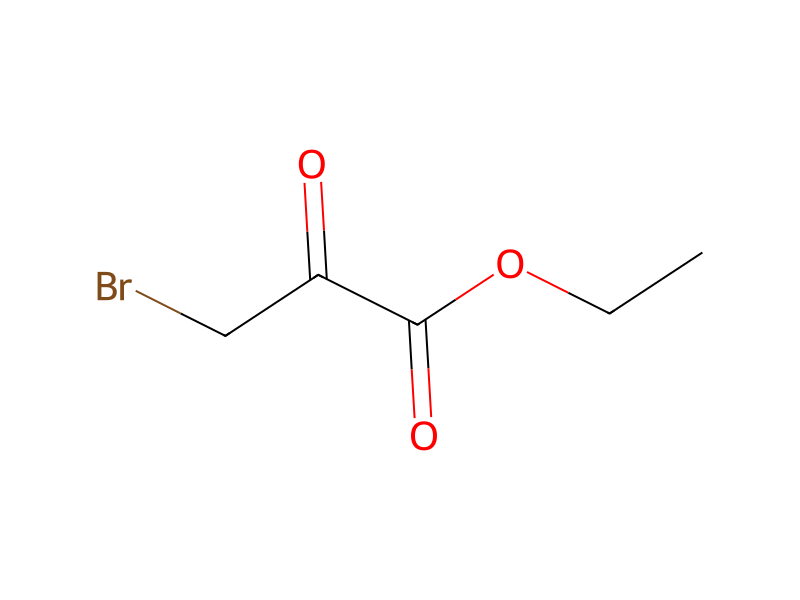
Ethyl bromopyruvate → Ethyl 8-bromo-6-(trifluoromethyl)imidazo[1,2-a]pyridine-2-carboxylate
HRID 467823
Reaction equation

[NH2:1][C:2]1[C:7]([Br:8])=[CH:6][C:5]([C:9]([F:12])([F:11])[F:10])=[CH:4][N:3]=1.Br[CH2:14][C:15](=O)[C:16]([O:18][CH2:19][CH3:20])=[O:17]>COCCOC>[Br:8][C:7]1[C:2]2[N:3]([CH:14]=[C:15]([C:16]([O:18][CH2:19][CH3:20])=[O:17])[N:1]=2)[CH:4]=[C:5]([C:9]([F:12])([F:10])[F:11])[CH:6]=1Participants
4



Procedure
To a solution of 2-amino-3-bromo-5-(trifluoromethyl)pyridine (10.0 g, 41.5 mmol) in 1,2 dimethoxyethane (300 mL) at room temperature was added ethyl bromopyruvate (9.889 g, 45.64 mmol) dropwise. The reaction mixture was heated to reflux for 18 h. The 1,2-dimethoxyethane was removed under reduced pressure and the residual solid was recrystallized from 1-chlorobutane. The solid was isolated by filtration and dried to afford an off-white solid, 8-bromo-6-(trifluoromethyl)imidazo[1,2-a]pyridine-2-carboxylic acid, ethyl ester (11.044 g).