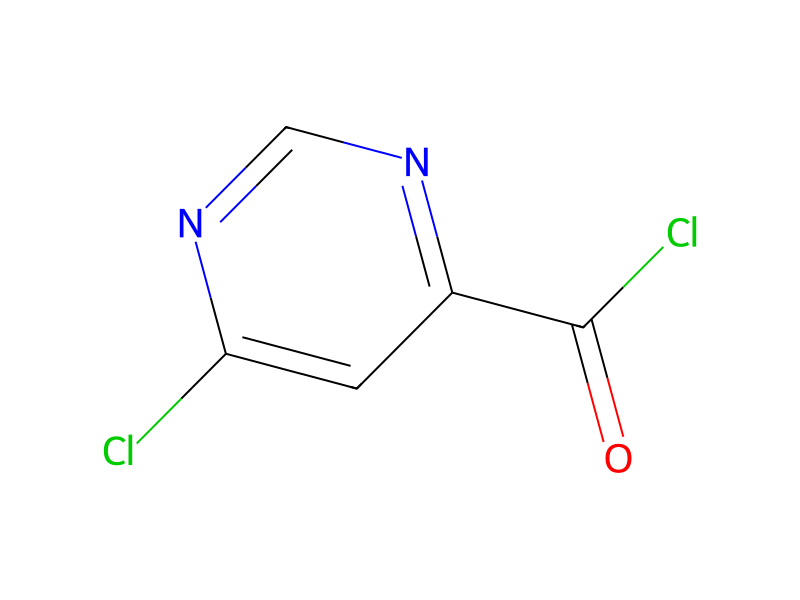
[Cl:1][C:2]1[N:7]=[CH:6][N:5]=[C:4]([C:8](Cl)=[O:9])[CH:3]=1.[Cl-].[Cl-].[Cl-].[Al+3].[CH3:15][N:16]1[C:24]2[C:19](=[CH:20][CH:21]=[CH:22][C:23]=2[CH3:25])[C:18]([CH3:27])([CH3:26])[CH2:17]1>C(Cl)Cl>[Cl:1][C:2]1[N:7]=[CH:6][N:5]=[C:4]([C:8]([C:21]2[CH:20]=[C:19]3[C:24](=[C:23]([CH3:25])[CH:22]=2)[N:16]([CH3:15])[CH2:17][C:18]3([CH3:27])[CH3:26])=[O:9])[CH:3]=1Under an argon atmosphere 0.473 g (2.67 mmol) 6-chloropyrimidine-4-carboxylic acid chloride and 0.427 g (3.20 mmol) aluminium trichloride were stirred in 20 mL DCM for 30 min. Then 0.520 g (2.67 mmol) 1,3,3,7-tetramethyl-2,3-dihydro-1H-indole in DCM were added dropwise to the reaction mixture and it was stirred for 45 min at RT, then for 45 min at 40° C. Next, the reaction mixture was decomposed with ice water/sodium hydroxide solution, extracted with DCM and the organic phase was evaporated down i. vac. The residue was taken up in MeOH and purified by preparative HPLC-MS. The fractions containing the product were combined and freeze-dried.
Loading…