Reaction equation
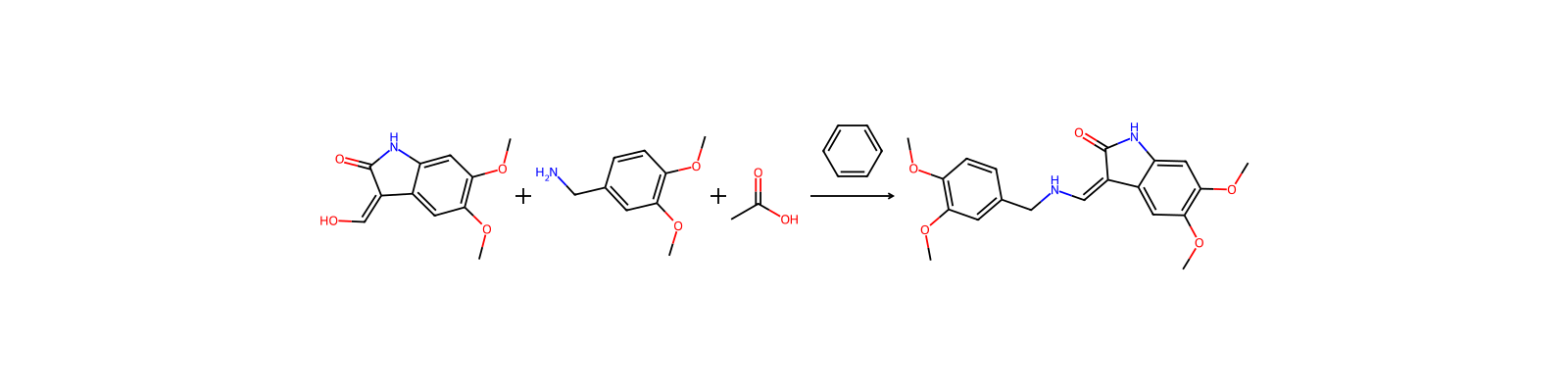
[CH3:1][O:2][C:3]1[CH:4]=[C:5]2[C:9](=[CH:10][C:11]=1[O:12][CH3:13])[NH:8][C:7](=[O:14])[C:6]2=[CH:15]O.[CH3:17][O:18][C:19]1[CH:20]=[C:21]([CH:24]=[CH:25][C:26]=1[O:27][CH3:28])[CH2:22][NH2:23].C(O)(=O)C>C1C=CC=CC=1>[CH3:1][O:2][C:3]1[CH:4]=[C:5]2[C:9](=[CH:10][C:11]=1[O:12][CH3:13])[NH:8][C:7](=[O:14])[C:6]2=[CH:15][NH:23][CH2:22][C:21]1[CH:24]=[CH:25][C:26]([O:27][CH3:28])=[C:19]([O:18][CH3:17])[CH:20]=1Participants
5
Reactant 3



Product 1

Reagents, catalysts & solvents 1

Procedure
5.00 g. of 5,6-Dimethoxy-3-hydroxymethylene oxindole, 6.00 g. of 3,4-dimethoxy benzylamine and 2.20 g. of acetic acid in 40 ml. benzene were reacted as described in Example 5 to give 5.44 g. of product, m.p. 198°-200° C.
Workup
- customto give 5.44 g
Sources & evidence
- ORD record
- ord-097da2f5504447ae984f864cc7fdd477
- Source dataset
- uspto-grants-1979_11
- Patent number
- US04176191
Linked notes
Loading…