Reaction equation

[F:1][C:2]1[CH:7]=[CH:6][C:5]([C:8]([C:10]([C:12]2[CH:17]=[CH:16][C:15]([F:18])=[CH:14][CH:13]=2)=O)=O)=[CH:4][CH:3]=1.[C:19]1([NH2:26])[CH:24]=[CH:23][CH:22]=[CH:21][C:20]=1[NH2:25]>C(Cl)(Cl)Cl>[F:1][C:2]1[CH:7]=[CH:6][C:5]([C:8]2[C:10]([C:12]3[CH:17]=[CH:16][C:15]([F:18])=[CH:14][CH:13]=3)=[N:26][C:19]3[C:20](=[CH:21][CH:22]=[CH:23][CH:24]=3)[N:25]=2)=[CH:4][CH:3]=1Participants
4
Reactant 2
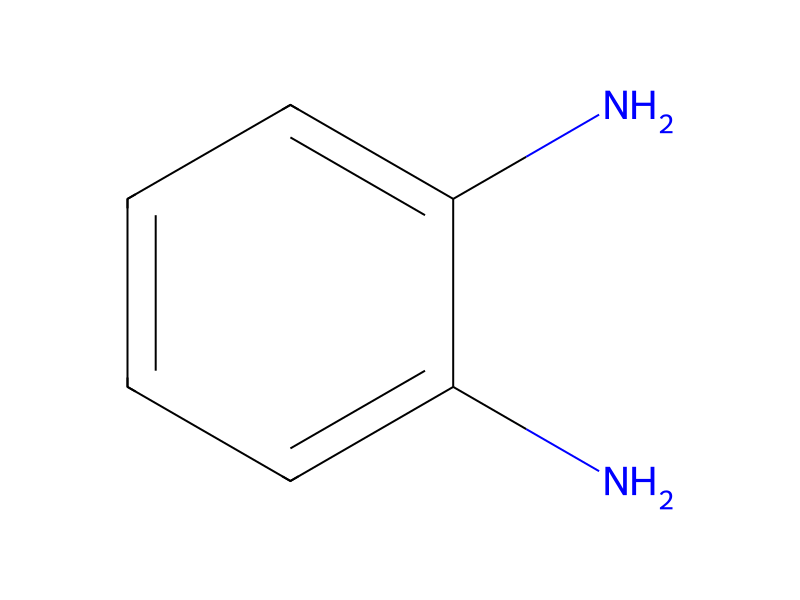

Product 1

Reagents, catalysts & solvents 1

Procedure
First, 3.71 g of 4,4′-difluorobenzil and 1.71 g of o-phenylenediamine were stirred on heating in a solvent (200 mL of chloroform) for 6 hours. The reaction solution was cooled to room temperature, washed with HCl (1N) and a saturated aqueous solution of sodium chloride, and dried with magnesium sulfate. The solvent was removed to obtain a ligand HFdpq (2,3-bis(4-fluorophenyl)quinoxaline) (pale yellow powder, yield: 99%).
Workup
- washwashed with HCl (1N)
- dry with materiala saturated aqueous solution of sodium chloride, and dried with magnesium sulfate
- customThe solvent was removed
Sources & evidence
- ORD record
- ord-f6f87512a0344276ae4f31ac8ff75cf1
- Source dataset
- uspto-grants-2014_01
- Patent number
- US08637167B2
Linked notes
Loading…