Reaction equation

[O-2].[O-2].[O-2].[O-2].[O-2].[V+5:6].[V+5].[C:8]([OH:13])(=[O:12])[C:9]([OH:11])=[O:10].[V]>O>[C:8]([O-:13])(=[O:12])[C:9]([O-:11])=[O:10].[V+5:6].[C:8]([O-:13])(=[O:12])[C:9]([O-:11])=[O:10].[C:8]([O-:13])(=[O:12])[C:9]([O-:11])=[O:10].[C:8]([O-:13])(=[O:12])[C:9]([O-:11])=[O:10].[C:8]([O-:13])(=[O:12])[C:9]([O-:11])=[O:10].[V+5:6]Participants
Reactant 3
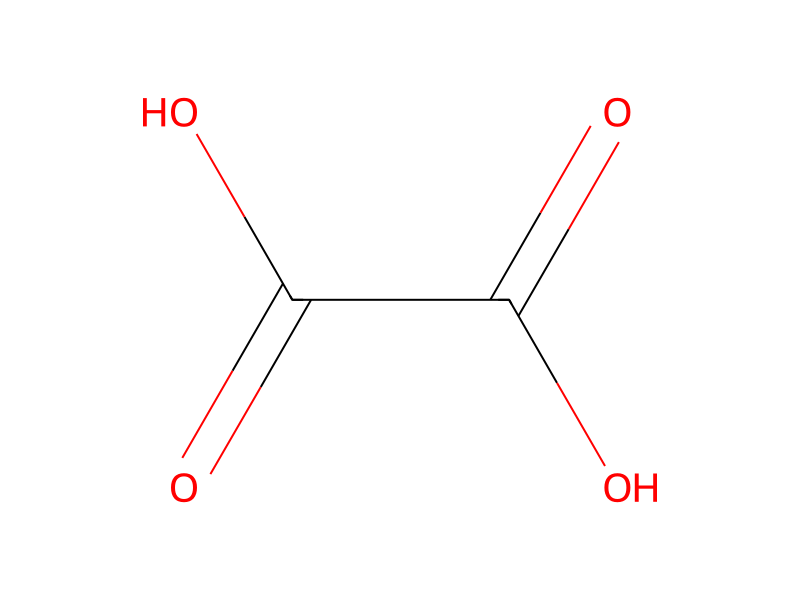


Product 1

Reagents, catalysts & solvents 1

Conditions
- Temperature
- 85 °C
Procedure
Vanadium pentoxide (V2O5) (229 g) was added to water (500 mL), to thereby yield a mixture, and an aliquot of oxalic acid (477 g) was added to the mixture with stirring at 80-90° C. so as to dissolve the vanadium compound, to thereby yield a solution of vanadium oxalate. Another aliquot of oxalic acid (963 g) was added to water (400 mL), and the resultant mixture was heated to 50-60° C. To the mixture, a solution of chromic anhydride (CrO3) (252 g) in water (200 mL) was added under sufficient stirring so as to dissolve the components, to thereby yield a solution of chromium oxalate. The thus-yielded solutions were mixed at 50-60° C., to thereby prepare a V—Cr-containing solution. To the V—Cr-containing solution, a solution of phosphomolybdic acid (H3(PMo12O40).20H2O) (41.1 g) dissolved in water (100 mL) and a solution of potassium acetate (CH3COOK) (4.0 g) dissolved in water (100 mL) were added. Subsequently, a 20 wt. % aqueous silica sol (containing 0.02 wt. % of Na2O) (2,500 g) was added, to thereby yield a slurry.
Workup
- customto thereby yield a mixture
Sources & evidence
- ORD record
- ord-c9c36ef879a5429ba79c4350f6599f88
- Source dataset
- uspto-grants-2003_11
- Patent number
- US06646163B2
Linked notes
Loading…