Reaction equation
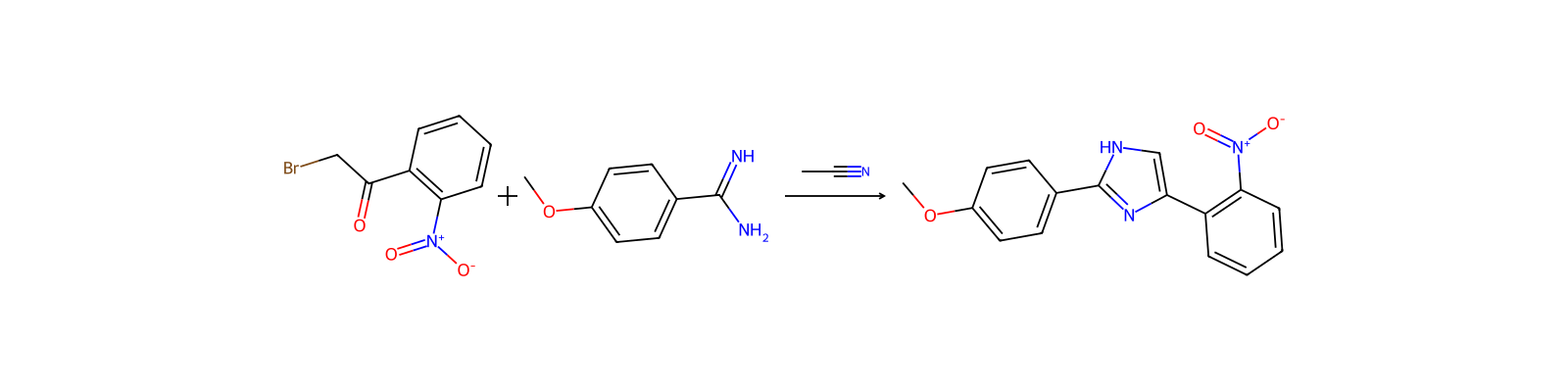
Br[CH2:2][C:3]([C:5]1[CH:10]=[CH:9][CH:8]=[CH:7][C:6]=1[N+:11]([O-:13])=[O:12])=O.[CH3:14][O:15][C:16]1[CH:24]=[CH:23][C:19]([C:20]([NH2:22])=[NH:21])=[CH:18][CH:17]=1>C(#N)C>[CH3:14][O:15][C:16]1[CH:24]=[CH:23][C:19]([C:20]2[NH:22][CH:2]=[C:3]([C:5]3[CH:10]=[CH:9][CH:8]=[CH:7][C:6]=3[N+:11]([O-:13])=[O:12])[N:21]=2)=[CH:18][CH:17]=1Participants
4
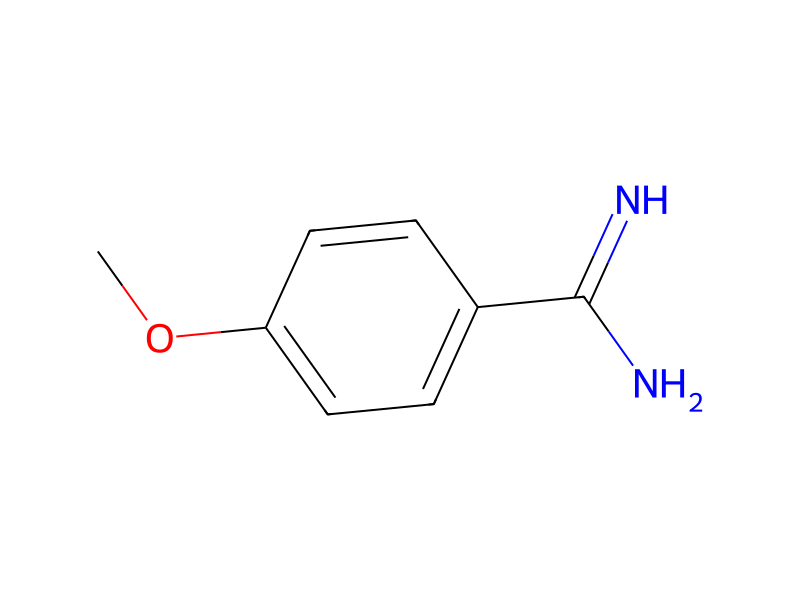
Reactant 2
Product 1
Reagents, catalysts & solvents 1

Conditions
- Temperature
- 40 °C
Procedure
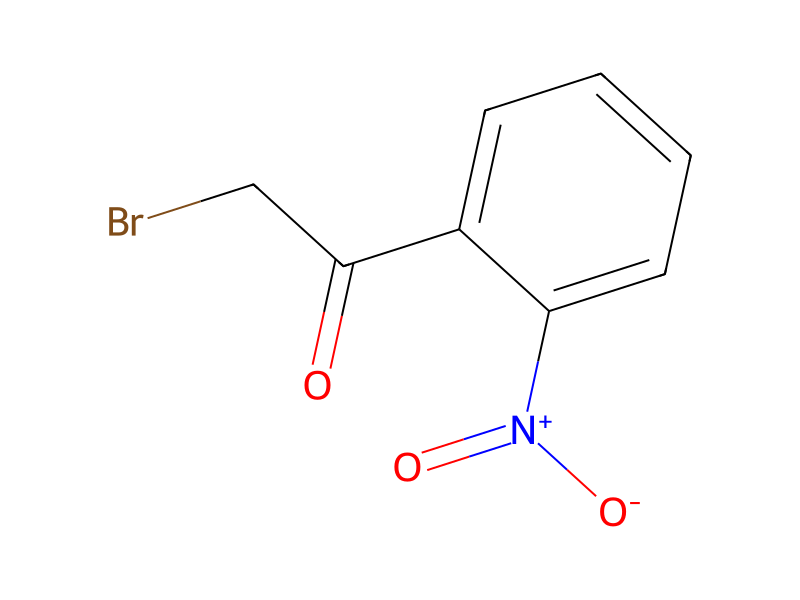
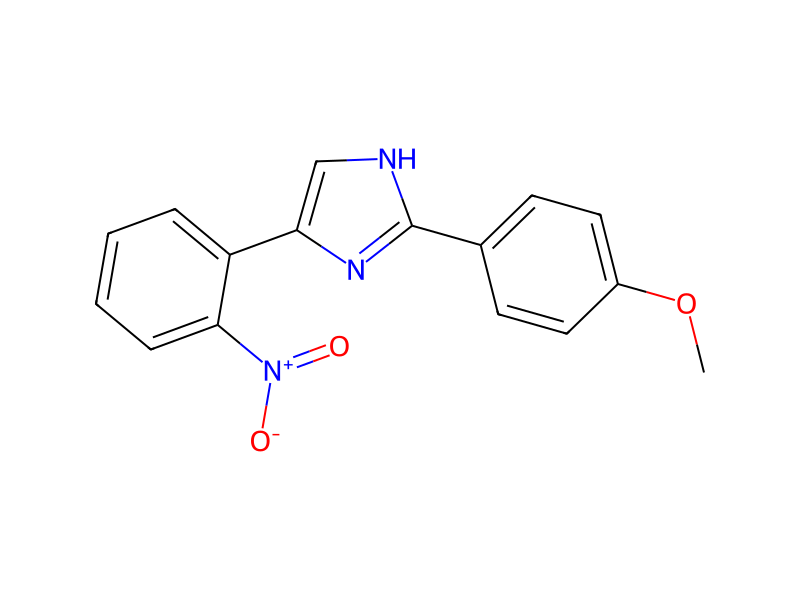
A mixture of 2-bromo-2'-nitroacetophenone (18 g), 4-methoxybenzamidine (20 g), and silica gel (20 g) in acetonitrile (500 ml) is heated at 40° C. for 24 hours. The reaction is evaporated and the residue put on a layer of silica gel and eluted with 50% ethyl acetate/hexane (1500 ml). The solution is evaporated under reduced pressure to approximately 250 ml and extracted with 5% HCl (3×250 ml) . The combined aqueous solution is basified with K2CO3 and extracted with ethyl acetate (3×400 ml) to afford 2-(4-methoxyphenyl)-4-(2-nitrophenyl)-imidazole (17 g) as a dark yellow oil which is used in the next step without further purification.
Workup
- customThe reaction is evaporated
- washthe residue put on a layer of silica gel and eluted with 50% ethyl acetate/hexane (1500 ml)
- customThe solution is evaporated under reduced pressure to approximately 250 ml
- extractionextracted with 5% HCl (3×250 ml)
- extractionextracted with ethyl acetate (3×400 ml)
Sources & evidence
- ORD record
- ord-9d60f882d102402f9eb08eac2373e8c7
- Source dataset
- uspto-grants-1998_08
- Patent number
- US05792766
Linked notes
Loading…