Diethyl Ether → 2-[[2-Methyl-4-((3-hydroxypropyloxy)carbonylamino)phenyl]amino]-1-pyrroline, hydrochloride
Reaction equation

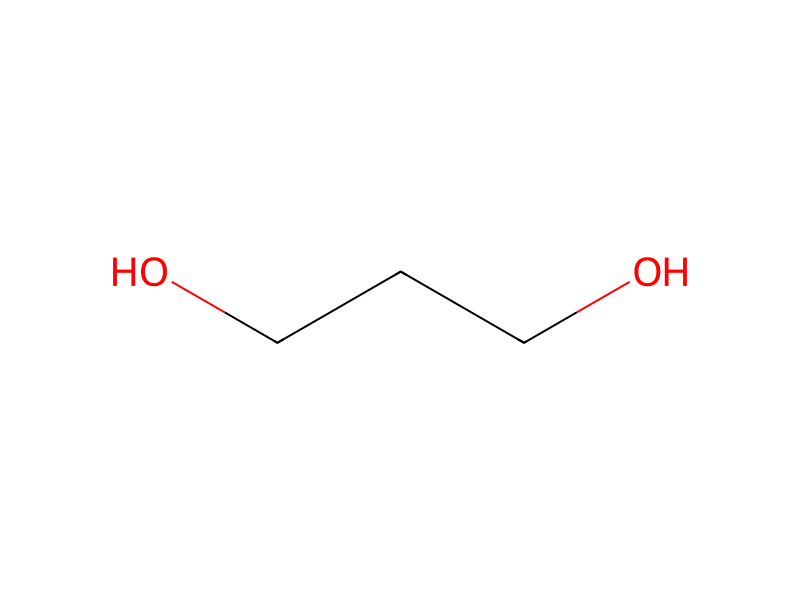
[ClH:1].Cl.[CH3:3][C:4]1[CH:9]=[C:8]([NH2:10])[CH:7]=[CH:6][C:5]=1[NH:11][C:12]1[CH2:16][CH2:15][CH2:14][N:13]=1.[CH2:17]([OH:21])[CH2:18][CH2:19][OH:20].[CH2:22]([O:24]CC)C>>[ClH:1].[CH3:3][C:4]1[CH:9]=[C:8]([NH:10][C:22]([O:20][CH2:19][CH2:18][CH2:17][OH:21])=[O:24])[CH:7]=[CH:6][C:5]=1[NH:11][C:12]1[CH2:16][CH2:15][CH2:14][N:13]=1Participants
4



Procedure
The title compound was prepared by the general method of Example 25 using the product compound of Example 9 and 1,3-propanediol. The reaction mixture was treated with an eight-fold quantity of diethyl ether, in which the product was not soluble. The oily product was triturated with several portions of ether until solid. The crude solid was stirred as a suspension in a small amount of 1:1 ethanol/methanol, and then collected by filtration. Drying in a high vacuum over 5A molecular sieves produced the desired compound as the hydrochloride salt.