Reaction equation

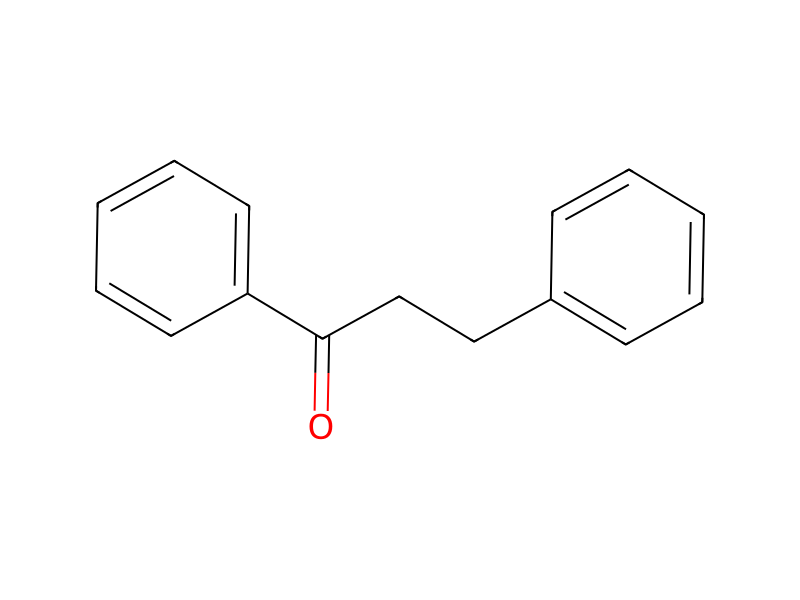
[C:1]1([C:7](=[O:16])[CH2:8][CH2:9][C:10]2[CH:15]=[CH:14][CH:13]=[CH:12][CH:11]=2)[CH:6]=[CH:5][CH:4]=[CH:3][CH:2]=1.[Br:17]Br>O1CCOCC1>[Br:17][CH:8]([CH2:9][C:10]1[CH:11]=[CH:12][CH:13]=[CH:14][CH:15]=1)[C:7]([C:1]1[CH:6]=[CH:5][CH:4]=[CH:3][CH:2]=1)=[O:16]Participants
4
Reactant 2

Product 1

Reagents, catalysts & solvents 1

Procedure
To a solution of 1,3-diphenylpropan-1-one (compound 2) (7.0 mmol) in 25 ml of anhydrous dioxane, a solution of bromine (7.0 mmol) in 10 ml of dioxane was slowly added dropwise over 30 min. The reaction mixture was left to stir at room temperature for 24 hrs to form 2-bromo-1,3-diphenylpropan-1-one (compound 3). Solvent was removed in vacuo. The 2-bromo-1,3-diphenylpropan-1-one product formed was determined by 1H NMR to be sufficiently pure to be used in the next step.
Workup
- waitThe reaction mixture was left
Sources & evidence
- ORD record
- ord-7893031004964d65825ebce55d7a7866
- Source dataset
- uspto-grants-2005_12
- Patent number
- US06974830B2
Linked notes
Loading…