HomeMCPWorkbenchSkills
HomeWorkbenchNotificationsMe
llms.txt · MCP GuidePrivacy Policy · Terms of Service · Supportv1.8.0
  1. Home
  2. /Reaction

Dichloromethane → PF-04880594

HRID 500734
Notes
Print preview

Reaction equation

HRID 500734 reaction equation
CC1(C)C(C)(C)OB([C:9]2[CH:10]=[C:11]3[CH:17]=[CH:16][NH:15][C:12]3=[N:13][CH:14]=2)O1.BrC1C=C2C=CNC2=NC=1.[F:29][CH:30]([F:49])[CH2:31][N:32]1[CH:36]=[C:35]([C:37]2[CH:42]=[CH:41][N:40]=[C:39]([NH:43][CH2:44][CH2:45][C:46]#[N:47])[N:38]=2)[C:34](I)=[N:33]1.[F-].[Cs+].ClCCl>COCCOC.C1C=CC(P(C2C=CC=CC=2)[C-]2C=CC=C2)=CC=1.C1C=CC(P(C2C=CC=CC=2)[C-]2C=CC=C2)=CC=1.Cl[Pd]Cl.[Fe+2]>[F:49][CH:30]([F:29])[CH2:31][N:32]1[CH:36]=[C:35]([C:37]2[CH:42]=[CH:41][N:40]=[C:39]([NH:43][CH2:44][CH2:45][C:46]#[N:47])[N:38]=2)[C:34]([C:9]2[CH:10]=[C:11]3[CH:17]=[CH:16][NH:15][C:12]3=[N:13][CH:14]=2)=[N:33]1
ParticipantsConditionsProcedureWorkupSources & evidenceReaction notes

Participants

8

Reactant 5

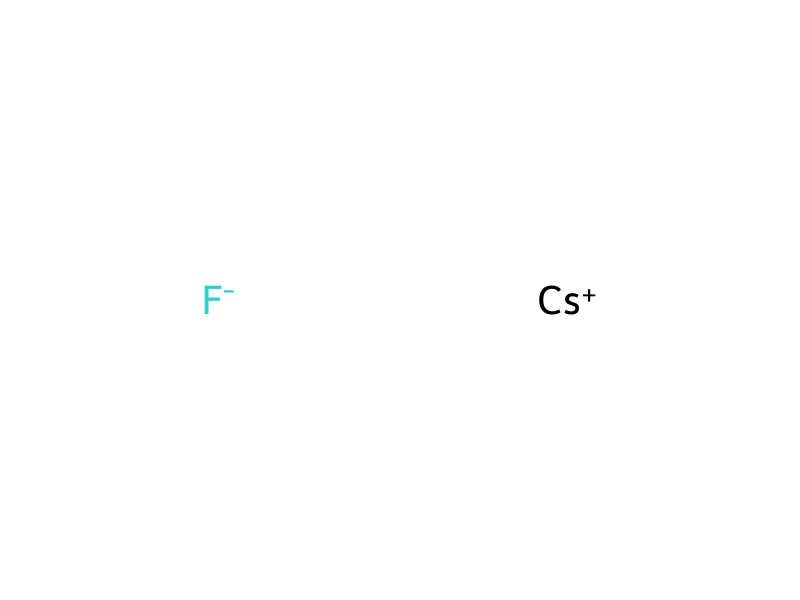
HCID 6344DichloromethaneHCID 25953Cesium fluorideHCID 103079325-bromo-1H-pyrrolo[2,3-b]pyridineHCID 242087895-(tetramethyl-1,3,2-dioxaborolan-2-yl)-1H-pyrrolo(2,3-b)pyridineHCID 57856249HCID 57856249, compound

Product 1

HCID 53356806PF-04880594

Reagents, catalysts & solvents 2

HCID 44119782Bis(cyclopenta-1,4-dien-1-yl(diphenyl)phosphane);dichloropalladium;iron(2+)CatalystHCID 80711,2-DimethoxyethaneSolvent

Conditions

Temperature
80 °C

Procedure

A mixture of the 5-(4,4,5,5-tetramethyl-1,3,2-dioxaborolan-2-yl)-1H-pyrrolo[2,3-b]pyridine B-33-4, which was prepared from 5-bromo-1H-pyrrolo[2,3-b]pyridine according to known literature methods, (145 mg, 0.594 mmol), 3-({4-[1-(2,2-difluoroethyl)-3-iodo-1H-pyrazol-4-yl]pyrimidin-2-yl}amino)propanenitrile (200 mg, 0.495 mmol), and cesium fluoride (1.48 mL of a 1M aqueous solution) in 3 mL of DME was deoxygenated with a nitrogen bubbler for 5 min and then [1,1′-bis(diphenylphosphino)ferrocene]dichloropalladium(II) 1:1 complex with dichloromethane (41 mg, 0.05 mmol) was added. The mixture was then heated in a microwave reactor at 80° C. for 2.5 hours. The reaction was degassed and fresh catalyst (20 mg) was added. The mixture was heated in the microwave at 80° C. for 4 more hours. The resulting dark mixture was partitioned between ethyl acetate and brine. The aqueous layer was extracted twice with ethyl acetate. The combined organics were washed with brine, dried over Magnesium sulfate and reduced to minimum volume. The residue was purified on silica gel using a gradient of 0-8% methanol (containing 10% ammonium hydroxide) in a mixture of tert-butyl methyl ether and dichloromethane (1:1) to give the desired product as a pale orange solid. This material was triturated twice with tert-butyl methyl ether to give 82 mg (42%) of analytically pure 3-({4-[1-(2,2-difluoroethyl)-3-(1H-pyrrolo[2,3-b]pyridin-5-yl)-1H-pyrazol-4-yl]pyrimidin-2-yl}amino)propanenitrile as an off white solid. 1H NMR (400 MHz, ACETONITRILE-d3) δ ppm 9.73 (br. s., 1H), 8.37 (d, J=2.02 Hz, 1H), 8.22 (s, 1H), 8.10 (d, J=5.31 Hz, 1H), 8.08 (d, J=1.52 Hz, 1H), 7.35-7.46 (m, 1H), 6.54 (d, J=3.79 Hz, 1H), 6.51 (dd, J=3.54, 2.02 Hz, 1H), 6.30 (tt, J=55.04, 3.82 Hz, 1H), 5.91 (br. t, J=6.82 Hz, 1H), 4.62 (td, J=14.65, 3.79 Hz, 2H), 3.39 (br. s., 2H), 2.40 (br. s., 2H).


Workup

  1. customwas deoxygenated with a nitrogen bubbler for 5 min
  2. customThe reaction was degassed
  3. additionfresh catalyst (20 mg) was added
  4. temperatureThe mixture was heated in the microwave at 80° C. for 4 more hours
  5. customThe resulting dark mixture was partitioned between ethyl acetate and brine
  6. extractionThe aqueous layer was extracted twice with ethyl acetate
  7. washThe combined organics were washed with brine
  8. dry with materialdried over Magnesium sulfate
  9. customThe residue was purified on silica gel using a gradient of 0-8% methanol (containing 10% ammonium hydroxide)
  10. additionin a mixture of tert-butyl methyl ether and dichloromethane (1:1)

Sources & evidence

ORD record
ord-f0ccbbc2c8ad4a0d8665ee1c82edae29
Source dataset
uspto-grants-2010_08
DOI
10.6084/m9.figshare.5104873.v1
Patent number
US07772246B2

Reaction notes

Loading…

On this pageParticipantsConditionsProcedureWorkupSources & evidenceReaction notes