Reaction equation

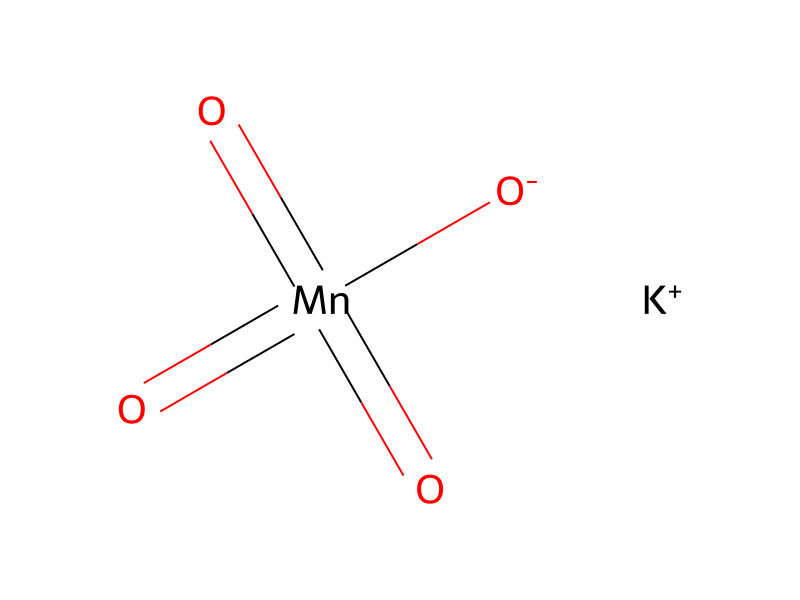
[CH2:1]([N:3]1[C:15]2[CH:14]=[CH:13][C:12]([CH:16]=[O:17])=[CH:11][C:10]=2[C:9]2[C:4]1=[CH:5][CH:6]=[CH:7][CH:8]=2)[CH3:2].[Mn]([O-])(=O)(=O)=[O:19].[K+].CO>CC(C)=O>[CH2:1]([N:3]1[C:15]2[CH:14]=[CH:13][C:12]([C:16]([OH:19])=[O:17])=[CH:11][C:10]=2[C:9]2[C:4]1=[CH:5][CH:6]=[CH:7][CH:8]=2)[CH3:2]Participants
5
Reactant 3


Product 1

Reagents, catalysts & solvents 1

Procedure
50 g of N-ethylcarbazole-3-carboxaldehyde was dissolved in 1 L of acetone, and the solution was added with 70.6 g of potassium permanganate under ice cooling, stirred for 3 hours, then added with 100 mL of methanol and filtered. The filtrate was evaporated under reduced pressure, and the residue was dissolved in aqueous sodium hydrogencarbonate. Then, the solution was made acidic by adding concentrated hydrochloric acid, and the deposited precipitates were collected to obtain 33 g of N-ethylcarbazole-3-carboxylic acid.
Workup
- filtrationfiltered
- customThe filtrate was evaporated under reduced pressure
- dissolutionthe residue was dissolved in aqueous sodium hydrogencarbonate
- additionby adding concentrated hydrochloric acid
- customthe deposited precipitates
- customwere collected
Sources & evidence
- ORD record
- ord-cd235a0093da40bfaf22543d6aff285a
- Source dataset
- uspto-grants-2004_03
- Patent number
- US06713473B1
Linked notes
Loading…