HomeMCPWorkbenchSkills
HomeWorkbenchNotificationsMe
llms.txt · MCP GuidePrivacy Policy · Terms of Service · Supportv1.8.0
  1. Home
  2. /Reaction

Quinoline → 3-Bromo-2-chloro-4-methyl-5-nitropyridine

HRID 508485
Notes
Print preview

Reaction equation

HRID 508485 reaction equation
[Cl-:1].[P+]=O.N1C2C(=CC=CC=2)C=CC=1.[Br:14][C:15]1[C:16](=O)[NH:17][CH:18]=[C:19]([N+:22]([O-:24])=[O:23])[C:20]=1[CH3:21]>O>[Br:14][C:15]1[C:16]([Cl:1])=[N:17][CH:18]=[C:19]([N+:22]([O-:24])=[O:23])[C:20]=1[CH3:21]
ParticipantsConditionsProcedureWorkupSources & evidenceReaction notes

Participants

5

Reactant 3

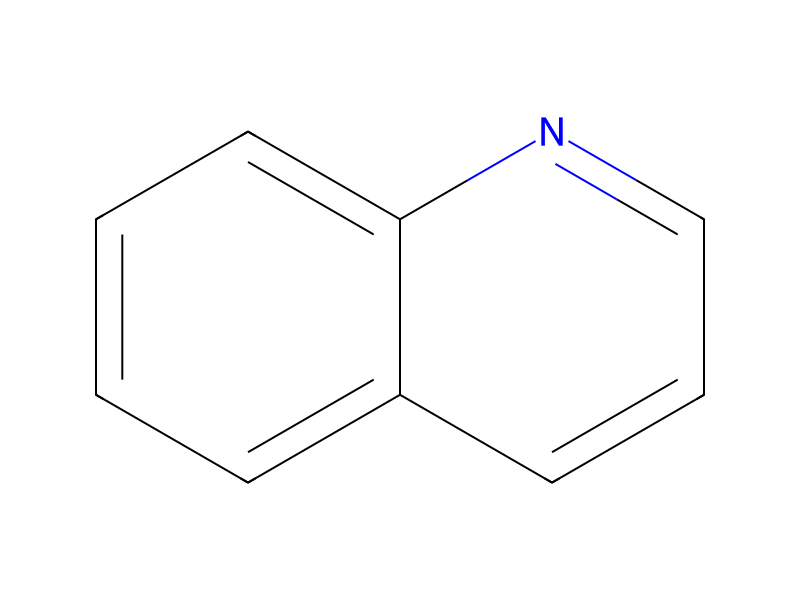
HCID 7047QuinolineHCID 401519143-Bromo-4-methyl-5-nitro-1,2-dihydropyridin-2-oneHCID 178527006HCID 178527006, compound

Product 1

HCID 401519173-Bromo-2-chloro-4-methyl-5-nitropyridine

Reagents, catalysts & solvents 1

HCID 962WaterSolvent

Conditions

Temperature
120 °C

Procedure

In a 25 ml single-necked round-bottomed flask, to 1.72 ml phosphorous oxide chloride kept at a temperature of 5° C., 0.857 ml quinoline and 3.40 g of 3-bromo-4-methyl-5-nitro-1H-pyridin-2-one are added consecutively. The resulting beige suspension is stirred under heating to 120° C. whereupon a brown solution is obtained. Stirring is continued for 2 hours. Afterwards, the solution is cooled down to an ambient temperature and poured into water. The resulting precipitate is collected by filtration, the filter cake washed with water (4×) and dried to give 3.15 g of the title compound in the form of a brown solid (MP: 60-62° C.).

Workup

  1. additionare added consecutively
  2. customis obtained
  3. stirringStirring
  4. temperatureAfterwards, the solution is cooled down to an ambient temperature
  5. filtrationThe resulting precipitate is collected by filtration
  6. washthe filter cake washed with water (4×)
  7. customdried

Sources & evidence

ORD record
ord-01b523e218064f4190a387d10ef1dbc2
Source dataset
uspto-grants-2015_08
DOI
10.6084/m9.figshare.5104873.v1
Patent number
US09096525B2

Reaction notes

Loading…

On this pageParticipantsConditionsProcedureWorkupSources & evidenceReaction notes