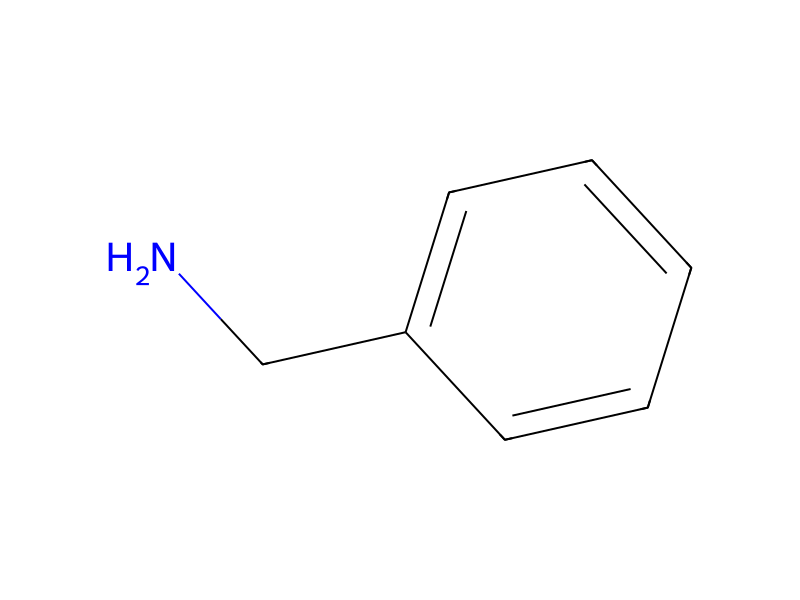
In a 250 mL round-bottomed flask, 2-bromo-1-(3-methoxyphenyl)ethanone (3 g, 13.1 mmol) was combined in CHCl3 (55.0 ml) and ethanol (11.0 ml) to give a colorless solution. The solution was cooled to 0° C. Benzylamine (5.61 g, 5.72 ml, 52.4 mmol) was added. After stirring for 0.5 h at 0° C. and then 2 h at room temperature, LCMS indicated that the reaction was mostly complete. (M+H)+=256 m/e. The reaction was cooled again to 0° C. and NaBH4 (743 mg, 19.6 mmol) was added. The reaction was allowed to warm to room temperature and was stirred at this temperature for 2.5 h until reaction was complete. The reaction mixture was quenched with 1M HCl (25 mL) at 0° C. followed by stirring at room temperature for 1 h. The reaction mixture was poured into 150 mL 1 M NaOH and extracted with ethyl acetate (3×150 mL). Combined organic phase was washed with brine, dried over MgSO4 and concentrated in vacuo. The crude material was purified by flash chromatography (silica gel, 80 g, 100% ethyl acetate) to yield 2-Benzylamino-1-(3-methoxy-phenyl)-ethanol (1.95 g, 58%). (M+H)|=258 m/e.