Reaction equation

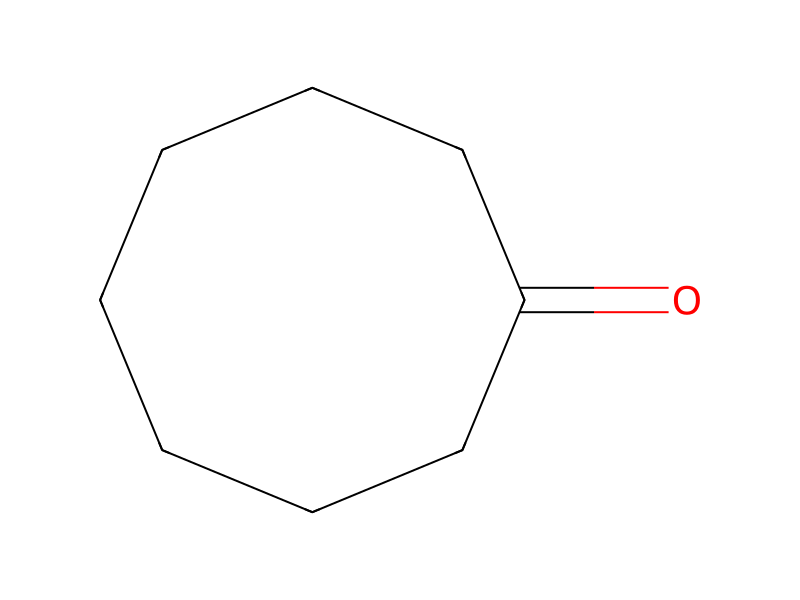
[C:1]1(=[O:9])[CH2:8][CH2:7][CH2:6][CH2:5][CH2:4][CH2:3][CH2:2]1.F[B-](F)(F)F.C([O+](CC)CC)C.[N+](=[CH:24][C:25]([O:27][CH2:28][CH3:29])=[O:26])=[N-]>C(Cl)Cl>[CH2:28]([O:27][C:25]([CH:24]1[CH2:2][CH2:3][CH2:4][CH2:5][CH2:6][CH2:7][CH2:8][C:1]1=[O:9])=[O:26])[CH3:29]Participants
Reactant 3


Product 1

Reagents, catalysts & solvents 1

Conditions
- Temperature
- 0 °C
Procedure
Cyclooctanone (25 g, 198 mmol) is dissolved in methylene chloride (500 mL) and the solution is cooled to 0° C. Triethyloxonium tetrafluoroborate (121.6 g, 640 mmol) is added. Ethyl diazoacetate (41.61 g, 365 mmol) is then added dropwise over 25 minutes, and the reaction is stirred at 0° C. for 4 hours. The reaction is quenched by pouring into a solution of sodium bicarbonate (160 g) in water (1.6 L) and stirring overnight. The reaction mixture is then extracted several times with methylene chloride, the combined organic layers are dried (Na2SO4), and the solvent is evaporated. The product is purified by vacuum distillation (0.2-1.0 mm Hg) and the fraction boiling between 100°-125° C. is collected to give 2-ethoxycarbonyl-cyclononanone.
Workup
- customThe reaction is quenched
- additionby pouring into a solution of sodium bicarbonate (160 g) in water (1.6 L)
- stirringstirring overnight
- extractionThe reaction mixture is then extracted several times with methylene chloride
- dry with materialthe combined organic layers are dried (Na2SO4)
- customthe solvent is evaporated
- distillationThe product is purified by vacuum distillation (0.2-1.0 mm Hg)
- customboiling between 100°-125° C.
- customis collected
Sources & evidence
- ORD record
- ord-e3905ec671db4476912df221b80d4a05
- Source dataset
- uspto-grants-1993_09
- Patent number
- US05244889
Linked notes
Loading…