Reaction equation

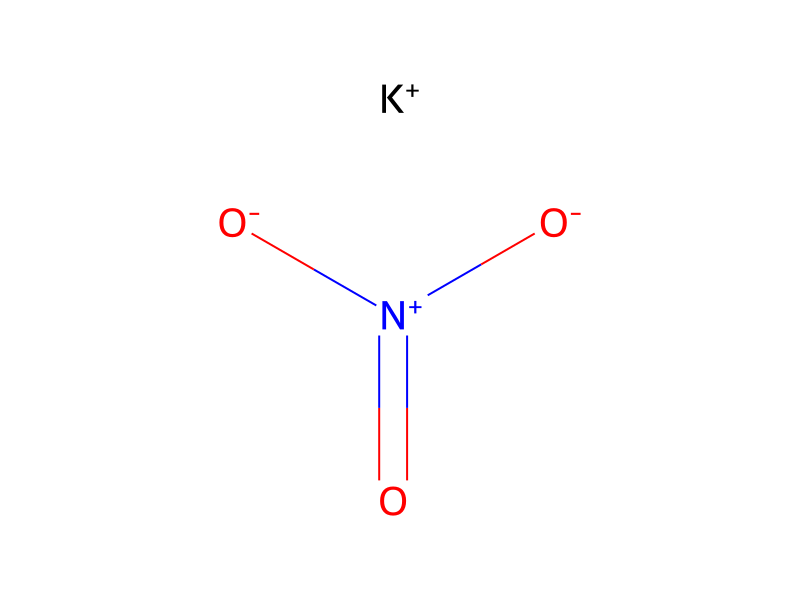
[F:1][C:2]1[CH:3]=[C:4]2[C:9](=[CH:10][CH:11]=1)[NH:8][C:7](=[O:12])[C:6](=[O:13])[NH:5]2.[N+:14]([O-])([O-:16])=[O:15].[K+]>OS(O)(=O)=O>[F:1][C:2]1[CH:3]=[C:4]2[C:9](=[CH:10][C:11]=1[N+:14]([O-:16])=[O:15])[NH:8][C:7](=[O:12])[C:6](=[O:13])[NH:5]2Participants
Reactant 2

Product 1

Reagents, catalysts & solvents 1

Conditions
- Temperature
- 0 °C
Procedure
The title compound was prepared using an adaptation of the method of Cheeseman (Cheeseman, G. W. H., J. Chem. Soc. 1171 (1962)). 6-Fluoro-1,4-dihydroquinoxaline-2,3-dione (200 mg, 1.10 mmol) was dissolved in 3 mL of concentrated H2SO4 and the blue green solution was cooled to 0° C. with stirring. To this was added in small portions KNO3 (110 mg, 1.10 mmol). The reaction was allowed to stir 1 h at 0° C. and then was allowed to come to room temperature and stir overnight. The brown-orange reaction mixture was then poured into 10 mL ice/H2O. The product was isolated by vacuum filtration as brown crystals which were rinsed with a small amount of cold H2O and air dried. The crystals were further dried under vacuum (0.1 torr, 25° C.) to yield 173.4 mg (70.0% yield).
Workup
- stirringto stir 1 h at 0° C.
- customto come to room temperature
- stirringstir overnight
- customThe product was isolated by vacuum filtration as brown crystals which
- washwere rinsed with a small amount of cold H2O and air
- customdried
- customThe crystals were further dried under vacuum (0.1 torr, 25° C.)
- customto yield 173.4 mg (70.0% yield)
Sources & evidence
- ORD record
- ord-6ae49bde145e4ce591c16616e897350f
- Source dataset
- uspto-grants-1997_04
- Patent number
- US05622952
Linked notes
Loading…