HomeMCPWorkbenchSkills
HomeWorkbenchNotificationsMe
llms.txt · MCP GuidePrivacy Policy · Terms of Service · Supportv1.8.0
  1. Home
  2. /Reaction

2,3-Dihydro-1,4-benzothiazine → N-{[2-(2,3-dihydro-4H-1,4-benzothiazin-4-yl)pyridine-3-yl]methyl}-N-pyridin-3-ylpyridin-3-amine

HRID 563948
Notes
Print preview

Reaction equation

HRID 563948 reaction equation
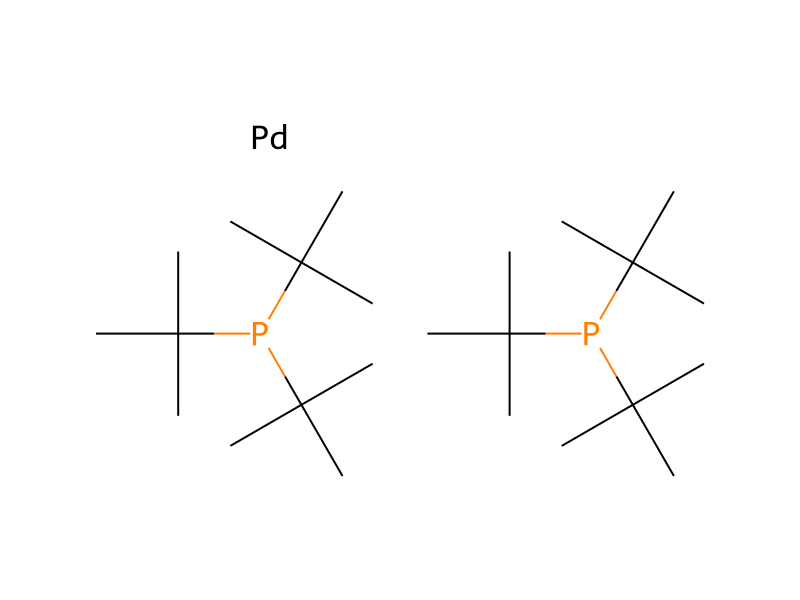
Cl[C:2]1[C:7]([CH2:8][N:9]([C:16]2[CH:17]=[N:18][CH:19]=[CH:20][CH:21]=2)[C:10]2[CH:11]=[N:12][CH:13]=[CH:14][CH:15]=2)=[CH:6][CH:5]=[CH:4][N:3]=1.[S:22]1[C:27]2[CH:28]=[CH:29][CH:30]=[CH:31][C:26]=2[NH:25][CH2:24][CH2:23]1.CC(C)([O-])C.[Na+]>O1CCOCC1.C(Cl)Cl.[Pd].C(P(C(C)(C)C)C(C)(C)C)(C)(C)C.C(P(C(C)(C)C)C(C)(C)C)(C)(C)C>[S:22]1[C:27]2[CH:28]=[CH:29][CH:30]=[CH:31][C:26]=2[N:25]([C:2]2[C:7]([CH2:8][N:9]([C:16]3[CH:17]=[N:18][CH:19]=[CH:20][CH:21]=3)[C:10]3[CH:11]=[N:12][CH:13]=[CH:14][CH:15]=3)=[CH:6][CH:5]=[CH:4][N:3]=2)[CH2:24][CH2:23]1
ParticipantsProcedureWorkupSources & evidenceReaction notes

Participants

7

Reactant 3

HCID 1510642,3-Dihydro-1,4-benzothiazineHCID 23676156Sodium t-butoxideHCID 59138879N-[(2-chloropyridin-3-yl)methyl]-N-pyridin-3-ylpyridin-3-amine

Product 1

HCID 24877535N-{[2-(2,3-dihydro-4H-1,4-benzothiazin-4-yl)pyridine-3-yl]methyl}-N-pyridin-3-ylpyridin-3-amineYield 75%

Reagents, catalysts & solvents 3

HCID 2734558
Bis(tri-tert-butylphosphine)palladium(0)
Catalyst
HCID 6344DichloromethaneSolvent
HCID 312751,4-DioxaneSolvent

Procedure

To a solution of N-[(2-chloropyridin-3-yl)methyl]-N-pyridin-3-ylpyridin-3-amine (110 mg, 0.37 mmol) and 3,4-dihydro-2H-1,4-benzothiazine (85 mg, 0.56 mmol) (prepared according to procedure described in patent WO 0220498) in dry dioxane (1.25 mnL) was added sodium t-butoxide (48 mg, 0.50 mmol), and bis(tri-t-butylphosphine) palladium(0) (34 mg, 0.066 mmol). The vessel was sealed with a septum cap, degassed (3×), and heated at 100 C for 3 hours. The cooled reaction was diluted with methylene chloride and washed with NaHCO3 solution, and water and the organic layer was dried over anhydrous sodium sulfate, filtered, and the solvent evaporated. The residue was subjected to silica gel chromatography eluting with a 20-90% acetone/hexane gradient to give the title compound as a colorless glass(114 mg, 75% yield). 1H-NMR (500 MHz, CDCl3): δ 8.41 (1H, d, J=4.9 Hz), 8.28 (2H, d, J=3.7 Hz), 8.23 (2H, d, J=4.6 Hz), 7.70 (1H, d, J=6.1 Hz), 7.21-7.26 (4H, m), 7.17 (1H, d, J=3.7 Hz), 7.16 (1H, d, J=4.6 Hz), 7.06 (1H, dd, J=4.9, 7.6 Hz), 6.91 (1H, t, J=7.8 Hz), 6.84 (1H, t, J=7.6 Hz), 6.32 (1H, d, J=8.0 Hz), 4.56 (2H,s), 4.13 (2H, br s), 3.32 (2H, t, J=5.6 Hz). m/e (m+1): 412.2.

Workup

  1. customThe vessel was sealed with a septum
  2. customcap
  3. customdegassed (3×)
  4. temperatureheated at 100 C for 3 hours
  5. customThe cooled reaction
  6. washwashed with NaHCO3 solution, and water
  7. dry with materialthe organic layer was dried over anhydrous sodium sulfate
  8. filtrationfiltered
  9. customthe solvent evaporated
  10. washeluting with a 20-90% acetone/hexane gradient

Sources & evidence

ORD record
ord-2a45e8208eea4da6acc20370d7b5e6f7
Source dataset
uspto-grants-2011_11
DOI
10.6084/m9.figshare.5104873.v1
Patent number
US08067607B2

Reaction notes

Loading…

On this pageParticipantsProcedureWorkupSources & evidenceReaction notes