HomeMCPWorkbenchSkills
HomeWorkbenchNotificationsMe
llms.txt · MCP GuidePrivacy Policy · Terms of Service · Supportv1.8.0
  1. Home
  2. /Reaction

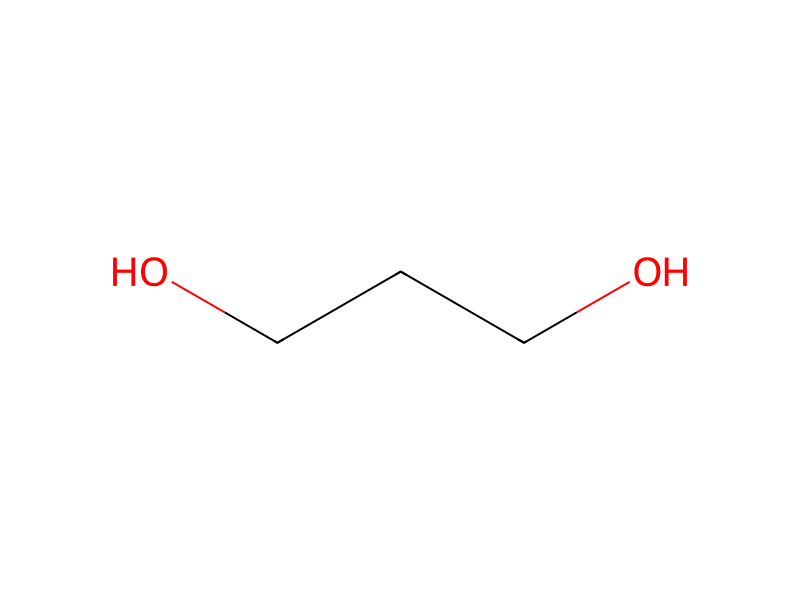
1,3-Propanediol → 3-(3,3-Bis(2-methylphenyl)-2-propen-1-yloxy)-1-propanol

HRID 566551
Notes
Print preview

Reaction equation

HRID 566551 reaction equation
C([Li])CCC.[CH2:6]([OH:10])[CH2:7][CH2:8][OH:9].Br[CH2:12][CH:13]=[C:14]([C:22]1[CH:27]=[CH:26][CH:25]=[CH:24][C:23]=1[CH3:28])[C:15]1[CH:20]=[CH:19][CH:18]=[CH:17][C:16]=1[CH3:21]>O>[CH3:28][C:23]1[CH:24]=[CH:25][CH:26]=[CH:27][C:22]=1[C:14]([C:15]1[CH:20]=[CH:19][CH:18]=[CH:17][C:16]=1[CH3:21])=[CH:13][CH2:12][O:9][CH2:8][CH2:7][CH2:6][OH:10]
ParticipantsProcedureWorkupSources & evidenceReaction notes

Participants

5

Reactant 3

HCID 104421,3-PropanediolHCID 212663063-Bromo-1,1-bis(2-methylphenyl)-1-propeneHCID 178418339Butyllithium

Product 1

HCID 107563633-(3,3-Bis(2-methylphenyl)-2-propen-1-yloxy)-1-propanolYield 31%

Reagents, catalysts & solvents 1

HCID 962WaterSolvent

Procedure

A solution of n-butyllithium in hexanes (15.2 ml, 2.5 M) was added dropwise under a nitrogen atmosphere to 1,3-propanediol (31 ml) on an ice-bath. When addition was complete the mixture was stirred 0.5 h at room temperature. 3-Bromo-1, 1-bis(2-methylphenyl)-1-propene (11.5 g, 38 mmol), prepared in a similar way to the method described in Example 26) was added and the reaction mixture was stirred at room temperature for 48 h and at 75° C. for 36 h. Water (100 ml) was added and the mixture was extracted with ethyl acetate (100 ml). The phases were separated and the organic phase was washed with water (2×50 ml), dried (MgSO4) and the solvent evaporated in vacuo. Flash chromatography of the residue on silica gel (300 g) using a gradient of n-heptane in ethyl acetate as eluent provided 3.5 g (31%) of 3-(3,3-bis(2-methyl phenyl)-2-propen-1-yloxy)-1-propanol.

Workup

  1. additionWhen addition
  2. additionwas added
  3. stirringthe reaction mixture was stirred at room temperature for 48 h and at 75° C. for 36 h
  4. extractionthe mixture was extracted with ethyl acetate (100 ml)
  5. customThe phases were separated
  6. washthe organic phase was washed with water (2×50 ml)
  7. dry with materialdried (MgSO4)
  8. customthe solvent evaporated in vacuo

Sources & evidence

ORD record
ord-03b2e68b6968434d95a943f114809173
Source dataset
uspto-grants-2001_01
DOI
10.6084/m9.figshare.5104873.v1
Patent number
US06174898B1

Reaction notes

Loading…

On this pageParticipantsProcedureWorkupSources & evidenceReaction notes