Reaction equation

[C:1]1(=O)[C:11]2=[C:12]3[C:7](=[CH:8][CH:9]=[CH:10]2)[CH:6]=[CH:5][CH:4]=[C:3]3[C:2]1=O.[C:15]1([CH2:21][C:22](=[O:30])[CH2:23][C:24]2[CH:29]=[CH:28][CH:27]=[CH:26][CH:25]=2)[CH:20]=[CH:19][CH:18]=[CH:17][CH:16]=1.[OH-].[K+]>C(O)C>[C:24]1([C:23]2[C:22](=[O:30])[C:21]([C:15]3[CH:20]=[CH:19][CH:18]=[CH:17][CH:16]=3)=[C:2]3[C:3]4=[C:12]5[C:7](=[CH:6][CH:5]=[CH:4]4)[CH:8]=[CH:9][CH:10]=[C:11]5[C:1]=23)[CH:25]=[CH:26][CH:27]=[CH:28][CH:29]=1Participants
5
Reactant 3

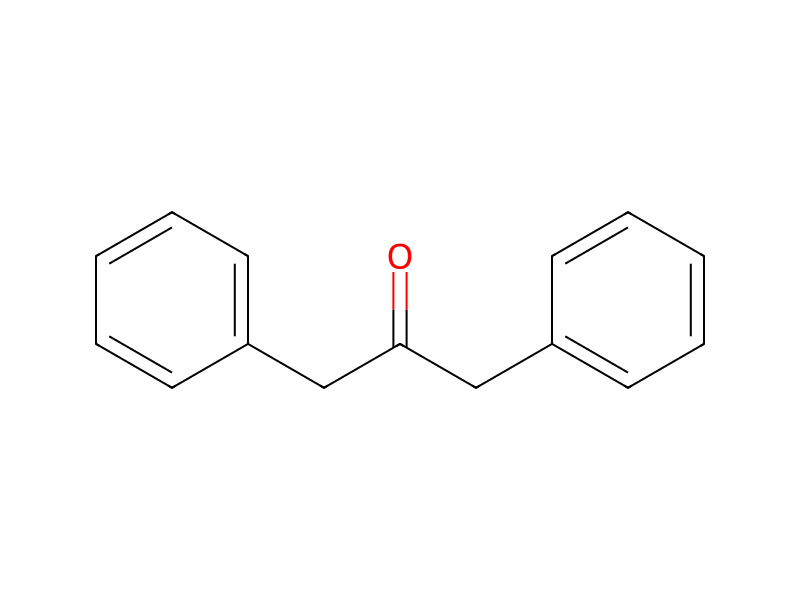

Product 1

Reagents, catalysts & solvents 1

Procedure
An amount of 5.9 g (32.4 mmol) of acenaphthenequinone and 7.5 g (35.7 mmol) of 1,3-diphenyl-2-propanone were suspended in 150 ml of ethanol and a solution of 2 g of potassium hydroxide in ethanol was added. After the mixture was heated to the reflux temperature, the same amount of the solution of potassium hydroxide in ethanol was further added and allowed to react for five minutes. The solid substance deposited after cooled on ice was filtered and washed with ethanol to obtain 8.24 g (23.1 mmol) of 7,9-diphenylcyclopenta[a]acenaphthylene-8-one. The yield was 71.3%.
Workup
- temperatureAfter the mixture was heated to the reflux temperature
- customto react for five minutes
- temperatureThe solid substance deposited after cooled on ice
- filtrationwas filtered
- washwashed with ethanol
Sources & evidence
- ORD record
- ord-67ff0ccdf2d04779ba9e16d21b7f7d1e
- Source dataset
- uspto-grants-2015_05
- Patent number
- US09028976B2
Linked notes
Loading…