HomeMCPWorkbenchSkills
HomeWorkbenchNotificationsMe
llms.txt · MCP GuidePrivacy Policy · Terms of Service · Supportv1.8.3
  1. Home
  2. /Reaction

Water → 2-acetylamino-2-(5'-chloro-3,4,5,6-tetrahydro-2H-[1,2']bipyridinyl-4-yl)-6-(4,4,5,5-tetramethyl-[1,3,2]-dioxaborolan-2-yl)hexanoic acid, tert-butylamide

HRID 579594
Print

Reaction equation

HRID 579594 reaction equation
[C:1]([NH:5][C:6](=[O:29])[C:7]([NH:25][C:26](=[O:28])[CH3:27])([CH:12]1[CH2:17][CH2:16][N:15]([C:18]2[CH:23]=[CH:22][C:21]([Cl:24])=[CH:20][N:19]=2)[CH2:14][CH2:13]1)[CH2:8][CH2:9][CH:10]=[CH2:11])([CH3:4])([CH3:3])[CH3:2].[CH3:30][C:31]1([CH3:38])[C:35]([CH3:37])([CH3:36])[O:34][BH:33][O:32]1.O>ClCCl.[Ir+].ClC1CCC=CCCC=1.C1(P(C2C=CC=CC=2)CCP(C2C=CC=CC=2)C2C=CC=CC=2)C=CC=CC=1>[C:1]([NH:5][C:6](=[O:29])[C:7]([NH:25][C:26](=[O:28])[CH3:27])([CH:12]1[CH2:13][CH2:14][N:15]([C:18]2[CH:23]=[CH:22][C:21]([Cl:24])=[CH:20][N:19]=2)[CH2:16][CH2:17]1)[CH2:8][CH2:9][CH2:10][CH2:11][B:33]1[O:34][C:35]([CH3:37])([CH3:36])[C:31]([CH3:38])([CH3:30])[O:32]1)([CH3:2])([CH3:3])[CH3:4]
ParticipantsProcedureWorkupSources & evidenceReaction notes

Participants

7

Reactant 3

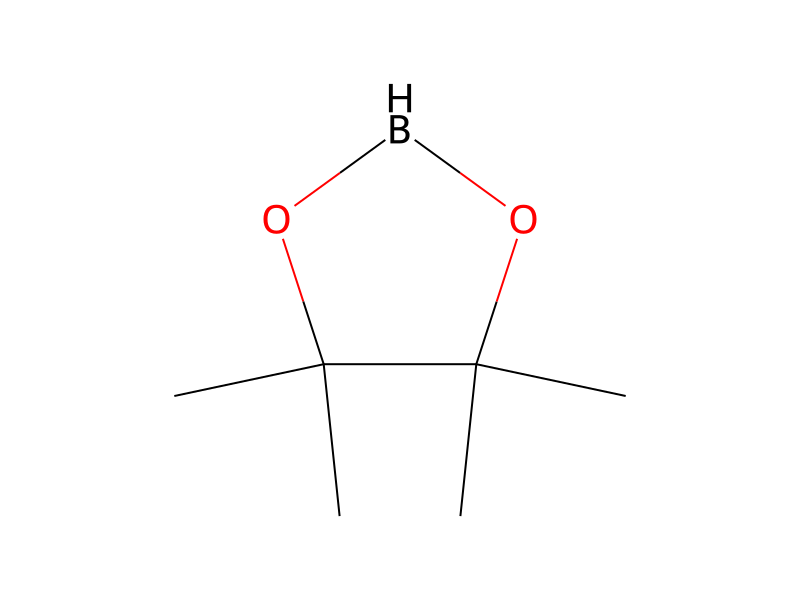
HCID 962WaterHCID 27347684,4,5,5-Tetramethyl[1,3,2]dioxaborolaneHCID 680643072-Acetylamino-2-(5'-Chloro-3,4,5,6-tetrahydro-2H-[1,2']bipyridinyl-4-yl)-hex-5-enoic acid, tert-butylamide

Product 1

HCID 680643092-acetylamino-2-(5'-chloro-3,4,5,6-tetrahydro-2H-[1,2']bipyridinyl-4-yl)-6-(4,4,5,5-tetramethyl-[1,3,2]-dioxaborolan-2-yl)hexanoic acid, tert-butylamideYield 82%

Reagents, catalysts & solvents

3
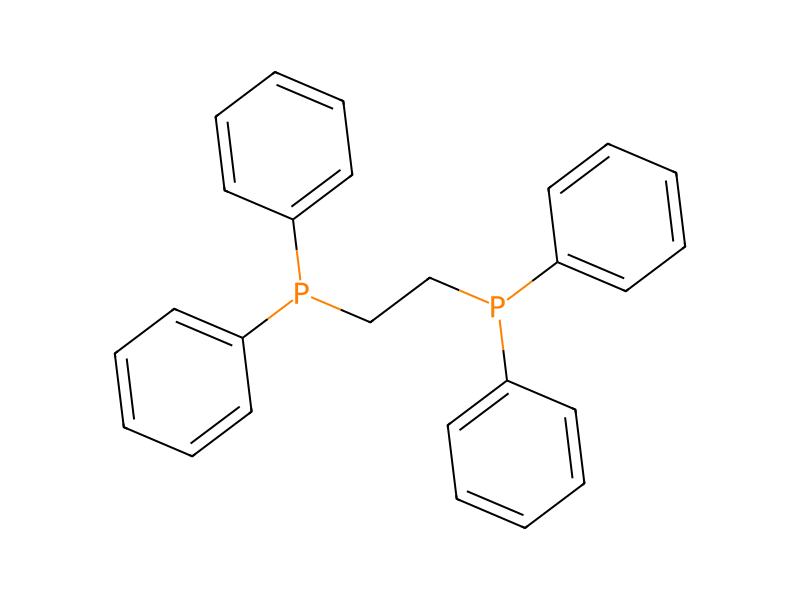
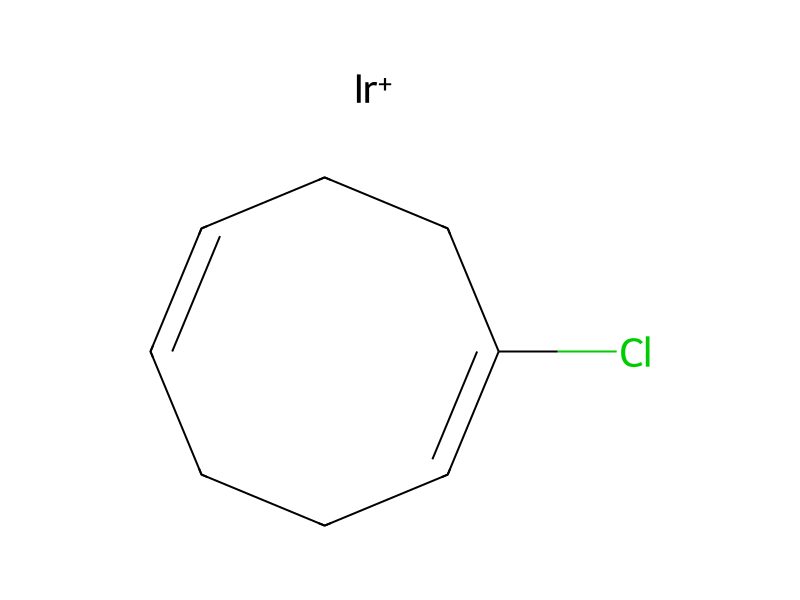
HCID 742671,2-Bis(diphenylphosphino)ethaneCatalystHCID 178478077HCID 178478077, compoundCatalystHCID 6344DichloromethaneSolvent

Procedure

A solution of 2-acetylamino-2-(5′-chloro-3,4,5,6-tetrahydro-2H-[1,2]bipyridinyl-4-yl)-hex-5-enoic acid, tert-butylamide (1.0 g, 2.38 mmol) in dichloromethane (10 mL) was treated with chloro-1,5-cyclooctadiene iridium(I) dimer (48 mg, 3 mol %) and 1,2-bis(diphenylphosphino)ethane (57 mg, 6 mol %) under an atmosphere of nitrogen. The solution was stirred at room temperature for 30 minutes and then 4,4,5,5-tetramethyl-[1,3,2]dioxaborolane (609 mg, 0.69 mL, 4.76 mmol) was added dropwise, and the reaction was then stirred overnight at room temperature. The reaction was poured into water and extracted with ethyl acetate (3×). The combined organic phase was washed with saturated aqueous sodium chloride, dried over anhydrous magnesium sulfate, filtered and concentrated in vacuo. Purification by flash column chromatography (silica gel, 10-40% ethyl acetate in heptane) gave the title compound as a white solid (1.07 g, 82%); 1H NMR (CDCl3, 300 MHz) δ 8.05 (d, J=2 Hz, 1H), 7.35 (dd, J1=9.0 Hz, J2=2.5 Hz, 1H), 6.96 (br s, NH, 1H), 6.53 (d, J=9.0 Hz, 1H), 5.78 (m, 1H), 5.46 (br s, NH, 1H), 4.36 (d, J=13 Hz, 1H), 4.12 (d, J=13 Hz, 1H), 2.83 (td, J1=13.5 Hz, J2=5 Hz, 1H), 2.72 (td, J1=12.5 Hz, J2=2 Hz, 2H), 2.42 (tt, J1=12 Hz, J2=3 Hz, 1H), 1.97 (s, 3H), 1.77 (m, 2H), 1.32-1.48 (m, 4H), 1.28 (s, 9H), 1.20 (s, 12H), 1.03-1.25 (m, 2H) and 0.72 (t, J=7.5 Hz, 2H); MS (+CI): m/z for C28H46BClN4O4: expected 548.3. found 549.3 (M+H)+, 571.3 (M+Na)+.

Workup

  1. stirringthe reaction was then stirred overnight at room temperature
  2. extractionextracted with ethyl acetate (3×)
  3. washThe combined organic phase was washed with saturated aqueous sodium chloride
  4. dry with materialdried over anhydrous magnesium sulfate
  5. filtrationfiltered
  6. concentrationconcentrated in vacuo
  7. customPurification by flash column chromatography (silica gel, 10-40% ethyl acetate in heptane)

Sources & evidence

ORD record
ord-b8f3a5c69ed54f8baf05699d57e6c93b
Source dataset
uspto-grants-2015_05
DOI
10.6084/m9.figshare.5104873.v1
Patent number
US09040703B2

Reaction notes

On this pageParticipantsProcedureWorkupSources & evidenceReaction notes