Reaction equation

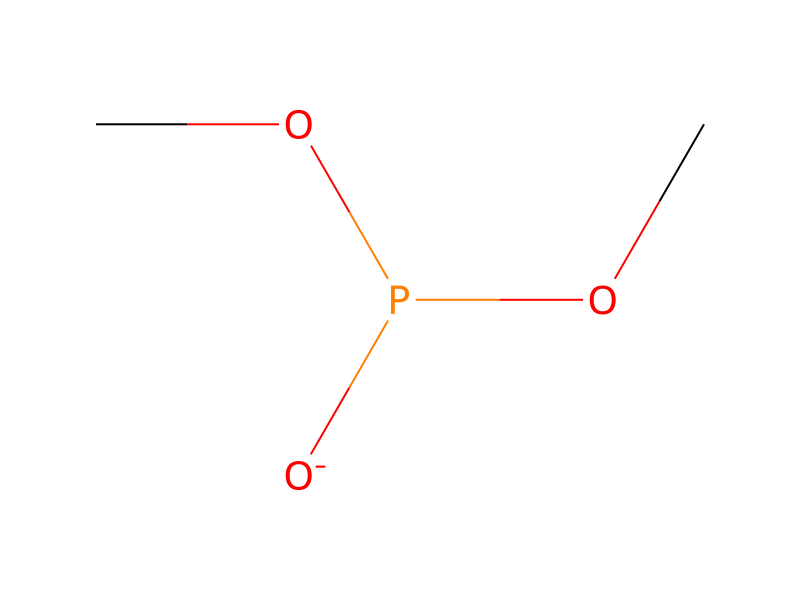
[O:1]=[CH:2][C:3]([Cl:6])([Cl:5])[Cl:4].[P:7]([O-:12])([O:10][CH3:11])[O:8][CH3:9]>C1C=CC=CC=1>[CH3:9][O:8][P:7]([CH:2]([OH:1])[C:3]([Cl:6])([Cl:5])[Cl:4])(=[O:12])[O:10][CH3:11]Participants
Reactant 2

Product 1

Reagents, catalysts & solvents 1

Procedure
In another process, Pesticide Manufacturing and Toxic Materials Control Encyclopedia, edited by Marshall Sittig, Noyes Data Corporation, Park Ridge, N.J. 1980, 75 grams of chloral are dropped into 60 grams of dimethyl phosphite at an initial temperature of 25° C. The temperature slowly rises to 50° C. and is kept at 50° C. to 60° C. by external cooling. After cooling the oil is dissolved in benzene, and the benzene solution is washed with a sodium bicarbonate solution and dried with anhydrous sodium sulfate. After the solvent has been distilled off, an oil is left which is almost completely solidified. After washing with an icy mixture of ether and petroleum ether, the trichloro-α-hydroxyethyl phosphonic dimethyl ester is obtained in the form of colorless needles with a melting point of about 81° C.
Workup
- customslowly rises to 50° C.
- customis kept at 50° C. to 60° C. by external cooling
- temperatureAfter cooling the oil
- washthe benzene solution is washed with a sodium bicarbonate solution
- dry with materialdried with anhydrous sodium sulfate
- distillationAfter the solvent has been distilled off
- waitan oil is left which
- washAfter washing with an icy mixture of ether and petroleum ether
Sources & evidence
- ORD record
- ord-c5ce51ce16d54ec393237a5cf910ef17
- Source dataset
- uspto-grants-1999_07
- Patent number
- US05922404
Linked notes
Loading…