HomeMCPSkillsWorkbenchOpenChem
HomeWorkbenchNotificationsMe
llms.txt · skill.md · MCP GuidePrivacy Policy · Terms of Service · Supportv1.8.5
  1. Home
  2. /Reaction

Pyridine → Ethyl (5-bromopyridin-3-yl)carbamate

HRID 595834
Print

Reaction equation

[Br:1][C:2]1[CH:3]=[C:4]([NH2:8])[CH:5]=[N:6][CH:7]=1.N1C=CC=CC=1.Cl[C:16]([O:18][CH2:19][CH3:20])=[O:17]>C(Cl)Cl>[Br:1][C:2]1[CH:3]=[C:4]([NH:8][C:16](=[O:17])[O:18][CH2:19][CH3:20])[CH:5]=[N:6][CH:7]=1
ParticipantsProcedureWorkupSources & evidenceReaction notes

Participants

5

Reactant 3

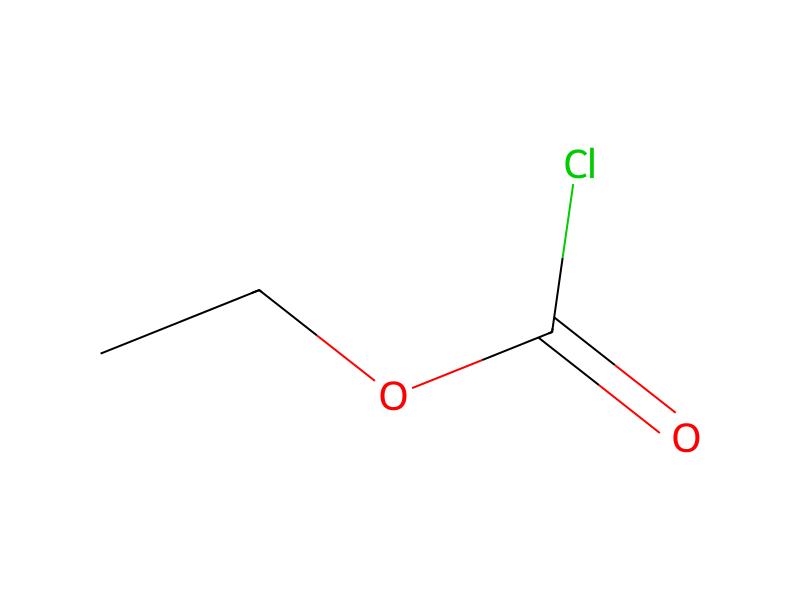
HCID 1049PyridineHCID 10928Ethyl chloroformateHCID 8176813-Amino-5-bromopyridine

Product 1

HCID 2823185Ethyl (5-bromopyridin-3-yl)carbamateYield 76%

Reagents, catalysts & solvents 1

HCID 6344DichloromethaneSolvent2×

Procedure

5-bromopyridin-3-amine (20 g, 116 mmol) was dissolved in DCM (500 mL) and pyridine (28.0 mL, 347 mmol) was added, followed by ethyl chloroformate (11.44 mL, 119 mmol) dropwise. The reaction mixture was stirred for 1.5 h at room temperature. The reaction mixture was diluted with DCM. The two phases were separated and the organic phase was washed with 10% CuSO4 solution (2×) sat. NaHCO3 solution (1×) Brine (1×) dried (Na2SO4) and evaporated. The residue was triturated with diethyl ether filtered and dried obtaining ethyl (5-bromopyridin-3-yl)carbamate (21.58 g, 76%) as a white solid. LCMS (m/z): 247.0 (MH+), 0.58 min; 1H NMR (400 MHz, CDCl3) δ ppm 8.62-8.15 (m, 3H) 7.00 (br. s., 1H) 4.27 (q, J=7.0 Hz, 2H) 1.34 (t, J=7.0 Hz, 3H).

Workup

  1. customThe two phases were separated
  2. washthe organic phase was washed with 10% CuSO4 solution (2×) sat. NaHCO3 solution (1×) Brine (1×)
  3. dry with materialdried (Na2SO4)
  4. customevaporated
  5. customThe residue was triturated with diethyl ether
  6. filtrationfiltered
  7. customdried

Sources & evidence

ORD record
ord-e5270d3de4124cbd97776175fea97e76
Source dataset
uspto-grants-2016_01
DOI
10.6084/m9.figshare.5104873.v1
Patent number
US09242996B2

Reaction notes

On this pageParticipantsProcedureWorkupSources & evidenceReaction notes