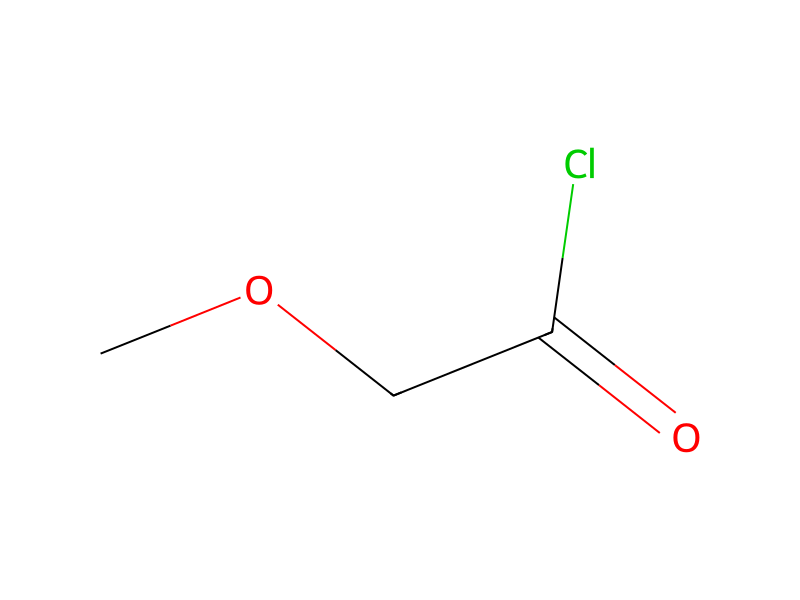
Methoxyacetyl chloride → HCID 67051018, compound
Reaction equation

[CH2:1]([O:8][C:9]1[CH:10]=[C:11]2[C:16](=[CH:17][CH:18]=1)[N:15]=[CH:14][C:13]([NH2:19])=[C:12]2[NH:20][CH2:21][CH:22]([CH3:24])[CH3:23])[C:2]1[CH:7]=[CH:6][CH:5]=[CH:4][CH:3]=1.[CH3:25][O:26][CH2:27][C:28](Cl)=O>ClCCl>[CH2:1]([O:8][C:9]1[CH:18]=[CH:17][C:16]2[N:15]=[CH:14][C:13]3[N:19]=[C:28]([CH2:27][O:26][CH3:25])[N:20]([CH2:21][CH:22]([CH3:24])[CH3:23])[C:12]=3[C:11]=2[CH:10]=1)[C:2]1[CH:3]=[CH:4][CH:5]=[CH:6][CH:7]=1Participants
4
Reactant 2

Product 1

Reagents, catalysts & solvents 1

Procedure
6-Benzyloxy-N4-(2-methylpropyl)quinoline-3,4-diamine was dissolved in 200 mL of dichloromethane and methoxyacetyl chloride (1.85 g, 17.1 mmol), diluted in 10 mL of dichloromethane, was added dropwise. After 1 hour, the solvent was removed and the resulting solid was dissolved in 250 mL of 3:1 methanol:water. Aqueous potassium carbonate (6M) was added and the reaction was heated at reflux temperature for 3 hours. The solvent was removed and the residue was partitioned between 200 mL of dichloromethane and 100 mL of water. The aqueous fraction was isolated and extracted three times with dichloromethane. The combined organic fractions were dried, filtered, and concentrated under reduced pressure. The resulting material was purified by flash column chromatography on silica gel eluting with a gradient of 0-4% methanol in dichloromethane. The clean fractions were combined and concentrated to give 4.2 g of 8-benzyloxy-1-(2-methylpropyl)-2-methoxymethyl-1H-imidazo[4,5-c]quinoline as a light brown solid.