Reaction equation

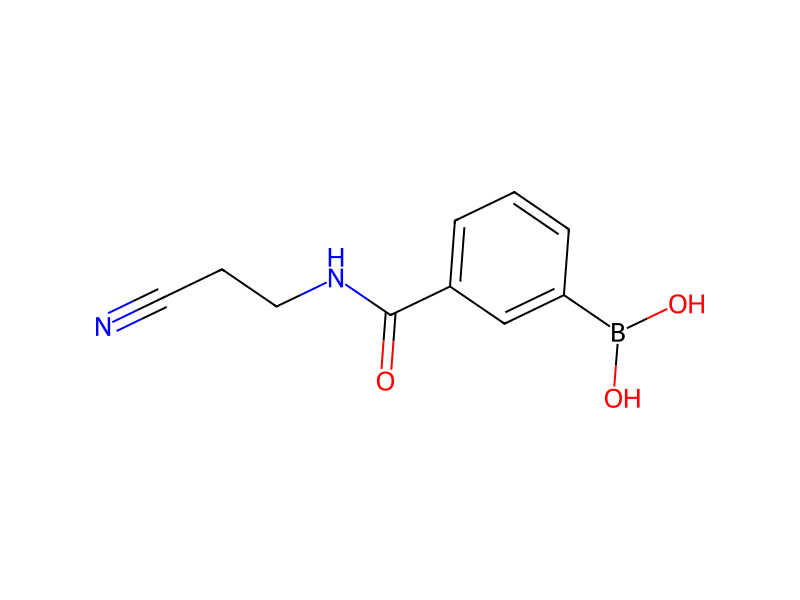
[C:1]([C@@H:3]([NH:12][C:13]([C@@H:15]1[CH2:20][CH2:19][CH2:18][CH2:17][N:16]1C(OC(C)(C)C)=O)=[O:14])[CH2:4][C:5]1[CH:10]=[CH:9][C:8](I)=[CH:7][CH:6]=1)#[N:2].[C:28]([CH2:30][CH2:31][NH:32][C:33]([C:35]1[CH:36]=[C:37](B(O)O)[CH:38]=[CH:39][CH:40]=1)=[O:34])#[N:29]>>[C:1]([C@@H:3]([NH:12][C:13]([C@@H:15]1[CH2:20][CH2:19][CH2:18][CH2:17][NH:16]1)=[O:14])[CH2:4][C:5]1[CH:6]=[CH:7][C:8]([C:39]2[CH:38]=[CH:37][CH:36]=[C:35]([C:33](=[O:34])[NH:32][CH2:31][CH2:30][C:28]#[N:29])[CH:40]=2)=[CH:9][CH:10]=1)#[N:2]Participants
3


Procedure
Prepared by a process analogous to that described in Method 2 Example 2 using (S)-tert-butyl 2-((S)-1-cyano-2-(4-iodophenyl)ethylcarbamoyl)piperidine-1-carboxylate and 3-(2-cyanoethylcarbamoyl)phenylboronic acid. NMR appeared to show the product was a free base.
Workup
- customPrepared by a process analogous to
Sources & evidence
- ORD record
- ord-d9a1cef1b27f4107977bac98126baed7
- Source dataset
- uspto-grants-2011_03
- Patent number
- US07902181B2
Linked notes
Loading…