Reaction equation

[C:1]1([NH2:8])[CH:6]=[CH:5][CH:4]=[CH:3][C:2]=1[NH2:7].[C:9]1(=O)[C:19]2=[C:20]3[C:15](=[CH:16][CH:17]=[CH:18]2)[CH:14]=[CH:13][CH:12]=[C:11]3[C:10]1=O>O>[CH:12]1[C:11]2[C:10]3[C:9]([C:19]4[C:20]=2[C:15]([CH:16]=[CH:17][CH:18]=4)=[CH:14][CH:13]=1)=[N:8][C:1]1[C:2](=[CH:3][CH:4]=[CH:5][CH:6]=1)[N:7]=3Participants
Reactant 2

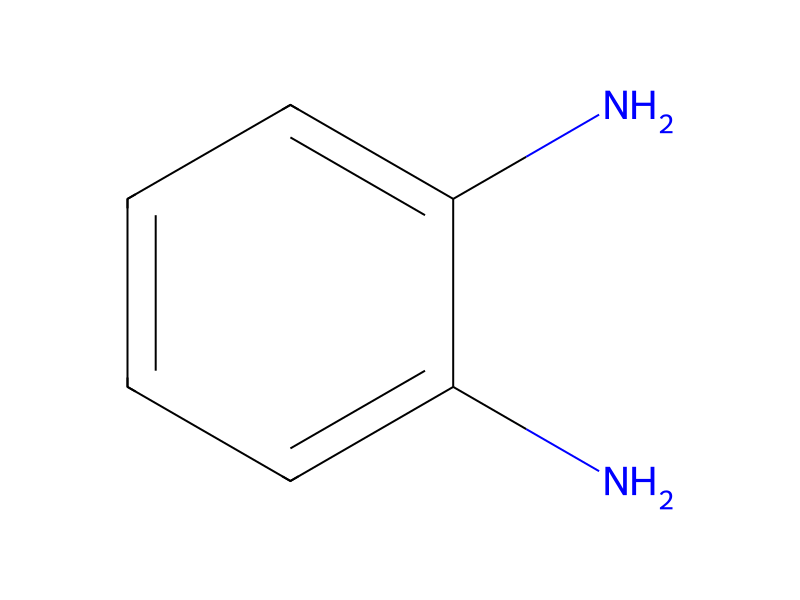
Product 1

Reagents, catalysts & solvents 1

Procedure
To a reaction vessel equipped with a stirrer, 5-liter of glacial acetic acid and 490 g of purified acenaphthenequinone were added and stirred for 15 minutes under nitrogen bubbling to obtain an acenathphenequinone solution. Similarly, to another reaction vessel equipped with a stirrer, 7.5-liter of glacial acetic acid and 275 g of o-phenylenediamine were added and stirred for 15 minutes under nitrogen bubbling to obtain an o-phenylenediamine solution. Thereafter, while stirring under nitrogen atmosphere, the o-phenylenediamine solution was added to the acenaphthenequinone solution gradually over one hour, and then allowed to react by continuing to stir for 3 hours. After ion exchange water was added to the obtained reaction liquid, the precipitate was filtrated to obtain a crude product. This crude product was recrystallized with a heated glacial acetic acid for purification.
Workup
- customto react
- stirringto stir for 3 hours
- filtrationthe precipitate was filtrated
Sources & evidence
- ORD record
- ord-2e7066ef39664a9980ed9e8b283148b5
- Source dataset
- uspto-grants-2011_03
- Patent number
- US07911569B2
Linked notes
Loading…