Reaction equation

C(=O)([O-])[O-].[Cs+].[Cs+].Cl[C:8]1[CH:9]=[N:10][CH:11]=[C:12]([C:14]([F:17])([F:16])[F:15])[CH:13]=1.[C:18]1([C:24]#[CH:25])[CH:23]=[CH:22][CH:21]=[CH:20][CH:19]=1>C(#N)C.O.CC#N.CC#N.Cl[Pd]Cl>[F:15][C:14]([F:17])([F:16])[C:12]1[CH:11]=[N:10][CH:9]=[C:8]([C:25]#[C:24][C:18]2[CH:23]=[CH:22][CH:21]=[CH:20][CH:19]=2)[CH:13]=1Participants
Reactant 3



Product 1

Reagents, catalysts & solvents 3


Procedure
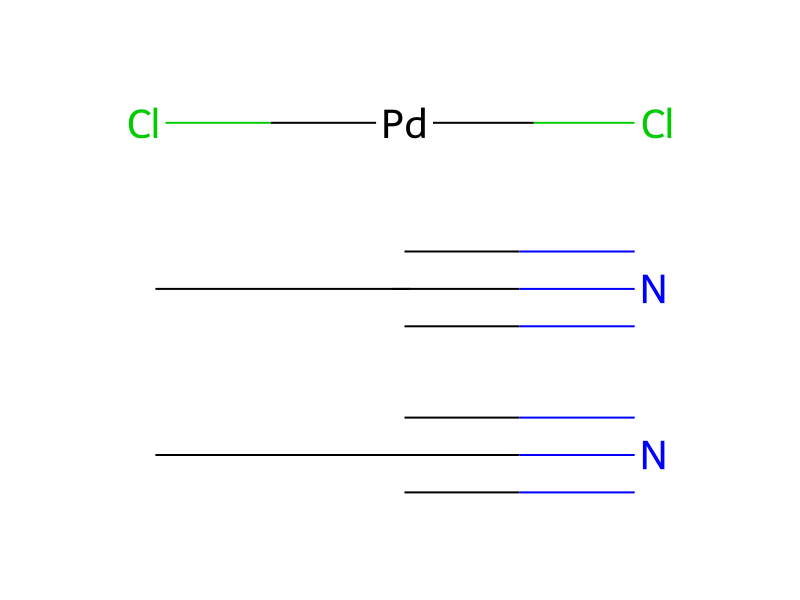
Charge a sealed tube under a positive pressure of argon with bis(acetonitrile)palladium (II) chloride (18 mg, 0.07 mmol), 2-dicyclohexylphosphino diphenyl (73 mg, 0.21 mmol), cesium carbonate (0.557 g, 1.71 mmol) and 3-chloro-5-trifluoromethylpyridine, (prepared essentially as described in PREPARATION 7), (0.12 g, 0.66 mmol) in acetonitrile and stir at room temperature for 25 min (Angew. Chem. Int. Ed. 42, 5993-5996, (2003)). Add phenylacetylene (0.1 mL, 0.86 mmol) and stir at 100° C. for 16 h. Cool to room temperature, dilute with water, and wash twice with ethyl acetate. Combine the ethyl acetate layers, dry (sodium sulfate), and concentrate. Purify the residue by silica gel chromatography, eluting with 100:0 to 50:50 hexanes:dichloromethane, to obtain the title compound (30 mg, 10%).
Workup
- custom(prepared essentially
- temperatureCool to room temperature
- washwash twice with ethyl acetate
- dry with materialdry (sodium sulfate)
- concentrationconcentrate
- customPurify the residue by silica gel chromatography
- washeluting with 100:0 to 50:50 hexanes
Sources & evidence
- ORD record
- ord-c56a8d459fa94d37b179bea42a95c2e4
- Source dataset
- uspto-grants-2011_03
- Patent number
- US07915424B2
Linked notes
Loading…