HomeMCPSkillsWorkbenchOpenChem
HomeWorkbenchNotificationsMe
llms.txt · skill.md · MCP GuidePrivacy Policy · Terms of Service · Supportv1.8.5
  1. Home
  2. /Reaction

Sodium t-butoxide → N-{4-[4-Methyl-2-(2-methyl-2H-pyrazolo[3,4-b]pyridin-4-ylamino)-phenylsulfanyl]-phenyl}-acetamide

HRID 607155
Print

Reaction equation

Cl[C:2]1[C:3]2[C:4](=[N:8][N:9]([CH3:11])[CH:10]=2)[N:5]=[CH:6][CH:7]=1.[NH2:12][C:13]1[CH:18]=[C:17]([CH3:19])[CH:16]=[CH:15][C:14]=1[S:20][C:21]1[CH:26]=[CH:25][C:24]([NH:27][C:28](=[O:30])[CH3:29])=[CH:23][CH:22]=1.CC(C)([O-])C.[Na+]>C1(C)C=CC=CC=1.C1C=CC(/C=C/C(/C=C/C2C=CC=CC=2)=O)=CC=1.C1C=CC(/C=C/C(/C=C/C2C=CC=CC=2)=O)=CC=1.C1C=CC(/C=C/C(/C=C/C2C=CC=CC=2)=O)=CC=1.[Pd].[Pd]>[CH3:19][C:17]1[CH:16]=[CH:15][C:14]([S:20][C:21]2[CH:22]=[CH:23][C:24]([NH:27][C:28](=[O:30])[CH3:29])=[CH:25][CH:26]=2)=[C:13]([NH:12][C:2]2[C:3]3[C:4](=[N:8][N:9]([CH3:11])[CH:10]=3)[N:5]=[CH:6][CH:7]=2)[CH:18]=1
ParticipantsProcedureWorkupSources & evidenceReaction notes

Participants

6

Reactant 3

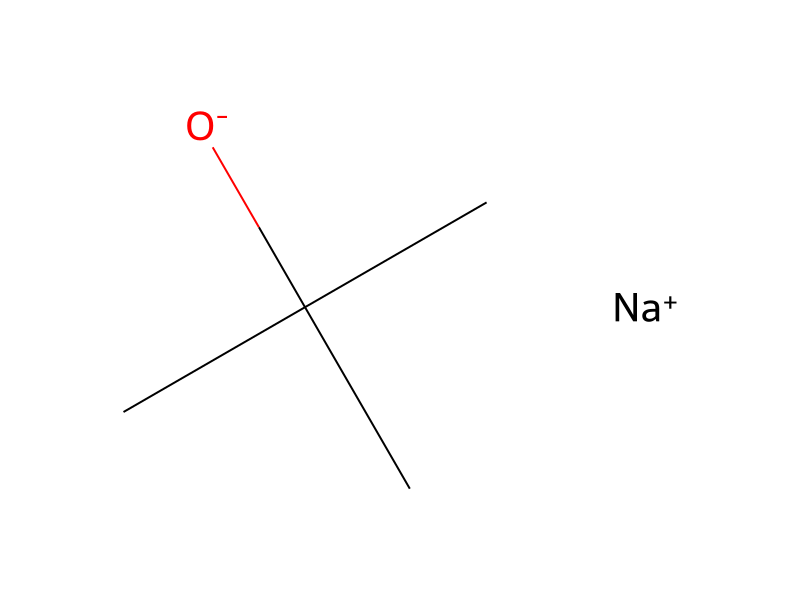
HCID 23676156Sodium t-butoxideHCID 43168935N-[4-(2-Amino-4-methyl-phenylsulfanyl)-phenyl]-acetamideHCID 668084904-Chloro-2-methyl-2H-pyrazolo[3,4-b]pyridine

Product 1

HCID 60204754N-{4-[4-Methyl-2-(2-methyl-2H-pyrazolo[3,4-b]pyridin-4-ylamino)-phenylsulfanyl]-phenyl}-acetamideYield 17.1%

Reagents, catalysts & solvents 2

HCID 9811564
Bis(dibenzylideneacetone)palladium
Catalyst
2×
HCID 1140TolueneSolvent

Procedure

A mixture of the product of Example 8c (47.3 mg, 0.282 mmol), the product of Example 7b (84.6 mg, 0.310 mmol), Pd2(dba)3 (12.9 mg, 0.0141 mmol), sodium t-butoxide (67.8 mg, 0.706 mmol), and 2,8,9-triisobutyl-2,5,8,9-tetraaza-1-phosphabicycl[3,3,3]undecane (19.3 mg, 0.0564 mmol) in toluene (4 mL) was degassed, left under a positive pressure of nitrogen, and heated under reflux for 2 h. Additional amounts of Pd2(dba)3 (4.0 mg, 0.0044 mmol) and PN3 (4.5 mg, 0.013 mmol) were added the reaction mixture was heated under reflux for an addition 2 h. The mixture was then cooled to room temperature and partitioned between ethyl acetate (30 mL) and water (30 mL). The aqueous phase was extracted with ethyl acetate and the combined organic phase was dried over anhydrous magnesium sulfate, filtered, and evaporated under reduced pressure. The residue was purified by chromatography on silica gel, eluting with 5% MeOH/CH2Cl2, to provide the title compound (0.0195 g, 17% yield). 1H NMR (300 MHz, DMSO-d6) δ ppm: 2.03 (s, 3H), 2.29 (s, 3H), 4.11 (s, 3H), 5.97 (d, J=5.15 Hz, 1H), 6.94-7.00 (m, 1H), 7.05 (dd, J=8.09, 1.47 Hz, 1H), 7.19 (s, 1H), 7.26 (d, J=8.82 Hz, 2H), 7.56 (d, J=8.82 Hz, 2H), 8.09 (d, J=5.15 Hz, 1H), 8.20 (s, 1H), 8.80 (s, 1H), 10.04 (s, 1H); MS (ESI+) m/z 404.1 (M+H)+.

Workup

  1. waitleft under a positive pressure of nitrogen
  2. temperatureheated
  3. temperatureunder reflux for 2 h
  4. temperaturewas heated
  5. temperatureunder reflux for an addition 2 h
  6. custompartitioned between ethyl acetate (30 mL) and water (30 mL)
  7. extractionThe aqueous phase was extracted with ethyl acetate
  8. dry with materialthe combined organic phase was dried over anhydrous magnesium sulfate
  9. filtrationfiltered
  10. customevaporated under reduced pressure
  11. customThe residue was purified by chromatography on silica gel
  12. washeluting with 5% MeOH/CH2Cl2

Sources & evidence

ORD record
ord-49ffdabc376f4beebe1c178a7d2d510c
Source dataset
uspto-grants-2011_03
DOI
10.6084/m9.figshare.5104873.v1
Patent number
US07915411B2

Reaction notes

On this pageParticipantsProcedureWorkupSources & evidenceReaction notes