HomeMCPSkillsWorkbenchOpenChem
HomeWorkbenchNotificationsMe
llms.txt · skill.md · MCP GuidePrivacy Policy · Terms of Service · Supportv1.8.5
  1. Home
  2. /Reaction

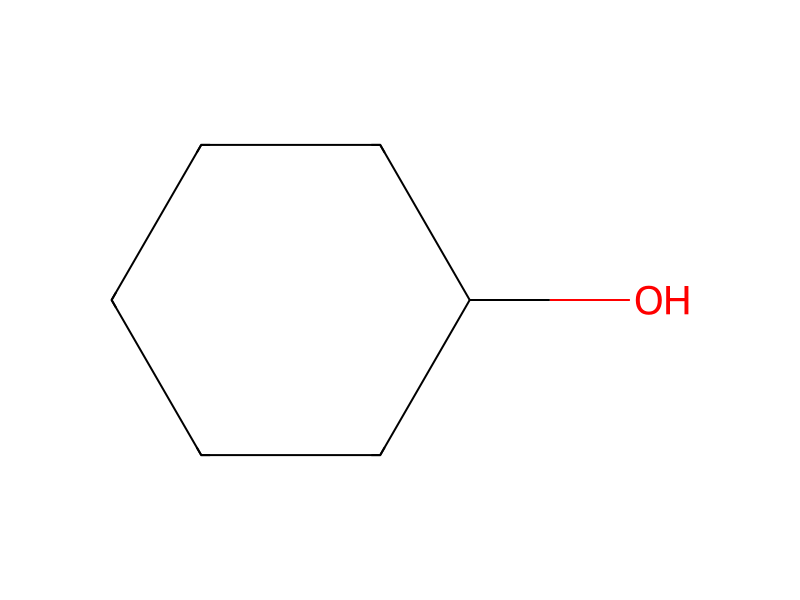
Cyclohexane → Cyclohexanol

HRID 611812
Print

Reaction equation

[CH2:1]1[CH2:6][CH2:5][CH2:4][CH2:3][CH2:2]1.ClC1C=CC=C(Cl)[N+]=1[O-:15]>[2H]C1C([2H])=C([2H])C([2H])=C([2H])C=1[2H]>[C:1]1(=[O:15])[CH2:6][CH2:5][CH2:4][CH2:3][CH2:2]1.[CH:1]1([OH:15])[CH2:6][CH2:5][CH2:4][CH2:3][CH2:2]1
ParticipantsConditionsProcedureWorkupSources & evidenceReaction notes

Participants

5

Reactant 2

HCID 8078CyclohexaneHCID 8176732,6-Dichloropyridine N-Oxide

Product 2

HCID 7966CyclohexanolHCID 7967Cyclohexanone

Reagents, catalysts & solvents 1

HCID 71601Benzene-D6Solvent

Conditions

Temperature
75 °C

Procedure

A solution containing 1M cyclohexane, 0.625M 2,6-dichloropyridine N-oxide and 0.10 mM [Ru(TPFPP)(NO)(H2O)](SbF6) in 1 ml d6 -benzene was heated for eight hours in a sealed tube at 75° C. affording high yields of oxidized products. A combined yield of 93% and 1500 catalytic turnovers were obtained of two products, cyclohexanone and cyclohexanol (mole ratio 4:1). In CD2Cl2 the same reaction conditions proceeded to give 5600 turnovers to generate cyclohexanone and cyclohexanol (8:1) in a combined 98% yield in twelve hours. 2,6-dichloropyridine-N-oxide was unable to hydroxylate cyclohexane by heat alone as shown by a control experiment, proving that the ruthenium complex must be present to effect reaction. ##STR8##

Workup

  1. customaffording high
  2. customyields of oxidized products

Sources & evidence

ORD record
ord-138f9668ca614035b421f58e8bd0638e
Source dataset
uspto-grants-1999_12
DOI
10.6084/m9.figshare.5104873.v1
Patent number
US06002026

Reaction notes

On this pageParticipantsConditionsProcedureWorkupSources & evidenceReaction notes