Reaction equation
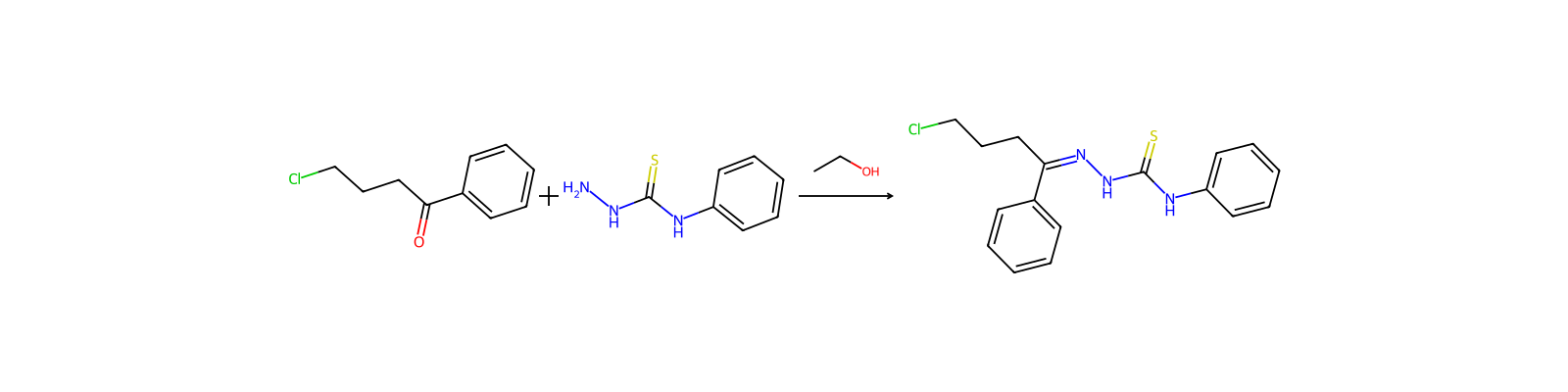
[Cl:1][CH2:2][CH2:3][CH2:4][C:5]([C:7]1[CH:12]=[CH:11][CH:10]=[CH:9][CH:8]=1)=O.[C:13]1([NH:19][C:20](=[S:23])[NH:21][NH2:22])[CH:18]=[CH:17][CH:16]=[CH:15][CH:14]=1>C(O)C>[Cl:1][CH2:2][CH2:3][CH2:4][C:5](=[N:22][NH:21][C:20](=[S:23])[NH:19][C:13]1[CH:18]=[CH:17][CH:16]=[CH:15][CH:14]=1)[C:7]1[CH:12]=[CH:11][CH:10]=[CH:9][CH:8]=1Participants
4
Reactant 2

Product 1

Reagents, catalysts & solvents 1

Procedure
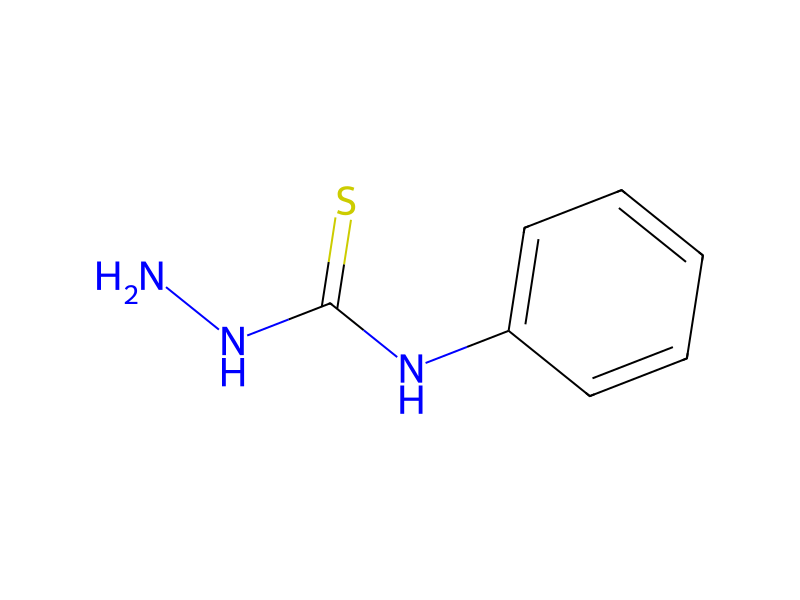
A mixture of 4-chlorobutyrophenone (6.7 mL, 42 mmol) and 4-phenyl-3-thiosemicarbazide (7.0 g, 42 mmol) in 500 mL of ethanol was warmed under a nitrogen atmosphere to dissolve all the solids and then the reaction stirred at room temperature for four days. The solid formed was collected by filtration and dried under reduced pressure to give 8.73 g of a white solid. Recrystallization of the solid from ethanol gave 7.99 g (57%) of the title compound as a white solid, mp 107-109° C.
Workup
- temperaturewas warmed under a nitrogen atmosphere
- dissolutionto dissolve all the solids
- customThe solid formed
- filtrationwas collected by filtration
- customdried under reduced pressure
Sources & evidence
- ORD record
- ord-a4ace6d1b5ed443c8dd624f2fd2543b9
- Source dataset
- uspto-grants-1999_12
- Patent number
- US06008362
Linked notes
Loading…