2,5-Dimethoxytetrahydrofuran → 2-chloro-3-(1H-pyrrol-1-yl)pyridine
Reaction equation

[Cl:1][C:2]1[C:7]([NH2:8])=[CH:6][CH:5]=[CH:4][N:3]=1.CO[CH:11]1[CH2:15][CH2:14][CH:13](OC)O1>C(O)(=O)C>[Cl:1][C:2]1[C:7]([N:8]2[CH:11]=[CH:15][CH:14]=[CH:13]2)=[CH:6][CH:5]=[CH:4][N:3]=1Participants
4
Reactant 2
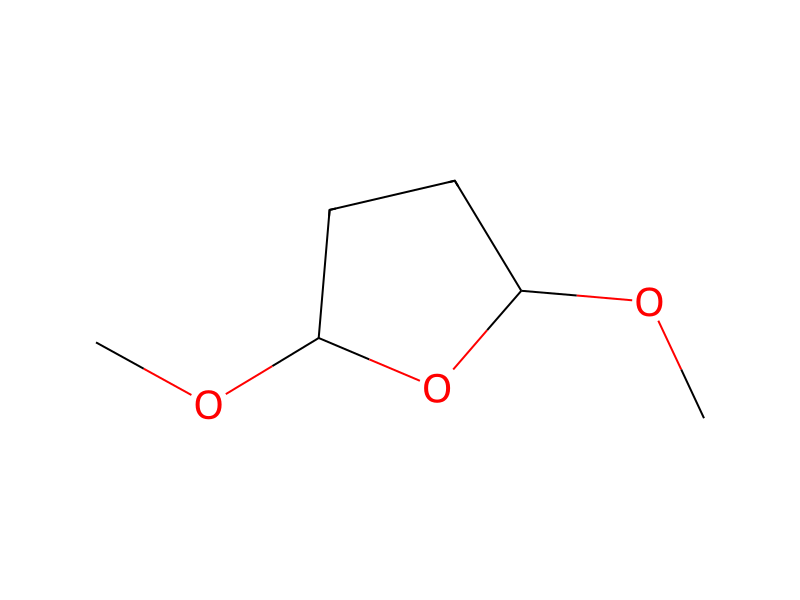

Product 1

Reagents, catalysts & solvents 1

Procedure
A solution of acetic acid (25 ml), 2-chloro-3-aminopyridine (5.1 g, 0.04 m) and 2,5-dimethoxytetrahydrofuran (0.05 m) was heated to reflux. After two hours, the mixture was concentrated to dryness, treated with ice and neutralized with saturate Na2CO3 solution. The aqueous layer was extracted with CHCl3 (3×100 ml). The organic extract was dried over Na2SO4, filtered and concentrated to dryness. The residue was distilled to yield 5.3 g (75% yield) of 2-chloro-3-(1-pyrrolyl) pyridine; b.p=95°-100° at 0.5 mm.
Workup
- concentrationthe mixture was concentrated to dryness
- additiontreated with ice and neutralized with saturate Na2CO3 solution
- extractionThe aqueous layer was extracted with CHCl3 (3×100 ml)
- extractionThe organic extract
- dry with materialwas dried over Na2SO4
- filtrationfiltered
- concentrationconcentrated to dryness
- distillationThe residue was distilled
Sources & evidence
- ORD record
- ord-32c4a8437d274ca7afb03a459bfa139a
- Source dataset
- uspto-grants-1979_03
- Patent number
- US04144343
Reaction notes
Loading…