Reaction equation
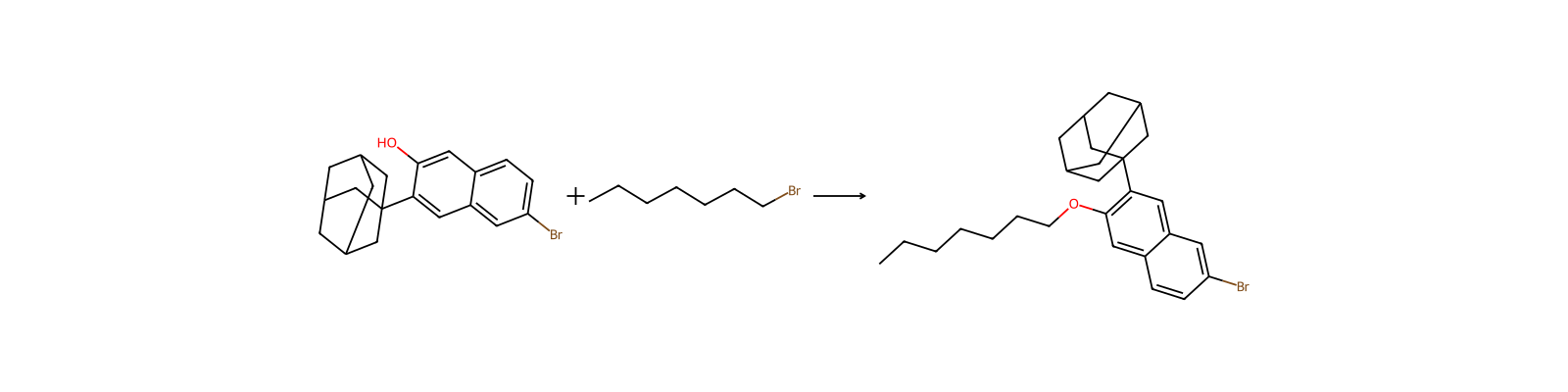
[C:1]12([C:11]3[C:12]([OH:22])=[CH:13][C:14]4[C:19]([CH:20]=3)=[CH:18][C:17]([Br:21])=[CH:16][CH:15]=4)[CH2:10][CH:5]3[CH2:6][CH:7]([CH2:9][CH:3]([CH2:4]3)[CH2:2]1)[CH2:8]2.Br[CH2:24][CH2:25][CH2:26][CH2:27][CH2:28][CH2:29][CH3:30]>>[C:1]12([C:11]3[CH:20]=[C:19]4[C:14]([CH:15]=[CH:16][C:17]([Br:21])=[CH:18]4)=[CH:13][C:12]=3[O:22][CH2:24][CH2:25][CH2:26][CH2:27][CH2:28][CH2:29][CH3:30])[CH2:8][CH:7]3[CH2:9][CH:3]([CH2:4][CH:5]([CH2:6]3)[CH2:10]1)[CH2:2]2Participants
3


Procedure
Following the procedure of Example 8(b), but reacting 3.4 g (9.5 mmol) of 3-(1-adamantyl)-6-bromo-2-naphthol with 2.05 g (11.4 mmol) of 1-bromoheptane, 3.4 g (79%) of 7-(1-adamantyl)-6-heptyloxy-2-bromonaphthalene were obtained.
Sources & evidence
- ORD record
- ord-e2f0dc87afa345819dc63efe88fe6de7
- Source dataset
- uspto-grants-1999_09
- Patent number
- US05952382
Linked notes
Loading…