HomeMCPWorkbenchSkills
HomeWorkbenchNotificationsMe
llms.txt · MCP GuidePrivacy Policy · Terms of Service · Supportv1.8.0
  1. Home
  2. /Reaction

Sodium Carbonate → N-(3-(trifluoromethyl)benzyl)-2-(2-nitrophenyl)isonicotinamide

HRID 625308
Notes
Print preview

Reaction equation

HRID 625308 reaction equation
[N+:1]([C:4]1[CH:9]=[CH:8][CH:7]=[CH:6][C:5]=1B(O)O)([O-:3])=[O:2].[F:13][C:14]([F:33])([F:32])[C:15]1[CH:16]=[C:17]([CH:29]=[CH:30][CH:31]=1)[CH2:18][NH:19][C:20](=[O:28])[C:21]1[CH:26]=[CH:25][N:24]=[C:23](Br)[CH:22]=1.C(=O)([O-])[O-].[Na+].[Na+]>COCCOC.O.C1C=CC([P]([Pd]([P](C2C=CC=CC=2)(C2C=CC=CC=2)C2C=CC=CC=2)([P](C2C=CC=CC=2)(C2C=CC=CC=2)C2C=CC=CC=2)[P](C2C=CC=CC=2)(C2C=CC=CC=2)C2C=CC=CC=2)(C2C=CC=CC=2)C2C=CC=CC=2)=CC=1>[F:32][C:14]([F:13])([F:33])[C:15]1[CH:16]=[C:17]([CH:29]=[CH:30][CH:31]=1)[CH2:18][NH:19][C:20](=[O:28])[C:21]1[CH:22]=[CH:23][N:24]=[C:25]([C:5]2[CH:6]=[CH:7][CH:8]=[CH:9][C:4]=2[N+:1]([O-:3])=[O:2])[CH:26]=1
ParticipantsConditionsProcedureWorkupSources & evidenceReaction notes

Participants

7

Reactant 3

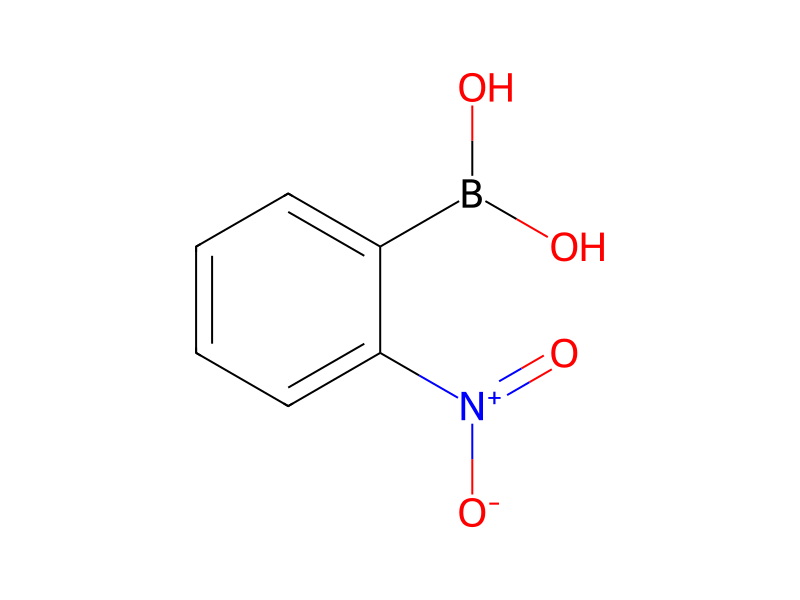
HCID 10340Sodium CarbonateHCID 2773548(2-Nitrophenyl)boronic acidHCID 867059444-Pyridinecarboxamide, 2-bromo-N-[[3-(trifluoromethyl)phenyl]methyl]-

Product 1

HCID 66586876N-(3-(trifluoromethyl)benzyl)-2-(2-nitrophenyl)isonicotinamideYield 83.3%

Reagents, catalysts & solvents 3

HCID 178418397
HCID 178418397, compound
Catalyst
HCID 962WaterSolvent2×
HCID 80711,2-DimethoxyethaneSolvent

Conditions

Temperature
80 °C

Procedure

Into a 250-mL 3-necked round bottom flask purged and maintained with an inert atmosphere of nitrogen, was placed a solution of 2-nitrophenylboronic acid (500 mg, 2.99 mmol, 1.00 equiv) in ethylene glycol dimethyl ether (30 mL), N-(3-(trifluoromethyl)benzyl)-2-bromoisonicotinamide 21a (1.08 g, 3.01 mmol, 1.00 equiv), Pd(PPh3)4 (334.7 mg, 0.30 mmol, 0.10 equiv), and a solution of sodium carbonate (1.6 g, 15.09 mmol, 5.00 equiv) in water (4 mL). The resulting solution was stirred for 1.5 h at 80° C. The reaction progress was monitored by TLC (ethyl acetate/petroleum ether=1:1). The resulting solution was diluted with 50 mL of water. The resulting solution was extracted with 2×100 mL of ethyl acetate and the organic layers combined and dried over magnesium sulfate. The solids were filtered out. The resulting mixture was concentrated under vacuum. The residue was applied onto a silica gel column and eluted with petroleum ether/EtOAc (20:1-5:1). The product was obtained as 1.0 g (83%) of a light yellow solid.

Workup

  1. customInto a 250-mL 3-necked round bottom flask purged
  2. temperaturemaintained with an inert atmosphere of nitrogen
  3. extractionThe resulting solution was extracted with 2×100 mL of ethyl acetate
  4. dry with materialdried over magnesium sulfate
  5. filtrationThe solids were filtered out
  6. concentrationThe resulting mixture was concentrated under vacuum
  7. washeluted with petroleum ether/EtOAc (20:1-5:1)

Sources & evidence

ORD record
ord-8e256eea48374e0f9c98782e46ee2020
Source dataset
uspto-grants-2016_04
DOI
10.6084/m9.figshare.5104873.v1
Patent number
US09301951B2

Reaction notes

Loading…

On this pageParticipantsConditionsProcedureWorkupSources & evidenceReaction notes