Reaction equation

[N+:1]([C:4]1[N:5]=[N:6][NH:7][N:8]=1)([O-:3])=[O:2].[NH3:9].[BH3:10].[H][H]>>[N+:1]([C:4]1[N:5]=[N:6][N:7]([B-:10]([N:6]2[N:7]=[N:8][C:4]([N+:1]([O-:3])=[O:2])=[N:5]2)([N:6]2[N:7]=[N:8][C:4]([N+:1]([O-:3])=[O:2])=[N:5]2)[N:9]2[N:7]=[N:8][C:4]([N+:1]([O-:3])=[O:2])=[N:5]2)[N:8]=1)([O-:3])=[O:2].[NH4+:1]Participants

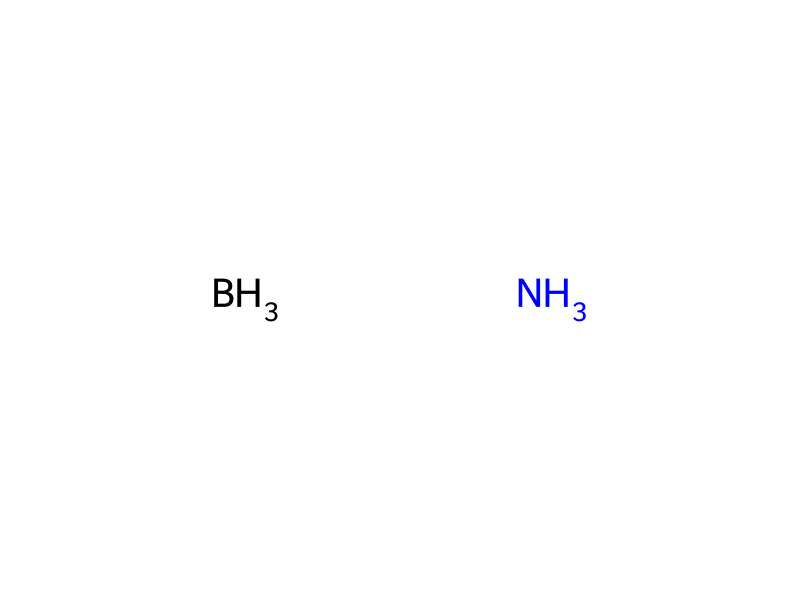


Conditions
- Temperature
- -196 °C
Procedure
A 150 mL glass ampule equipped with a grease free high-vacuum PTFE valve and a TEFLON™ coated stir bar was flamed-out under vacuum. Inside the dry-box, the ampule was loaded with 920 mg (8.00 mmol) 5-nitro-2H-tetrazole and 61.6 mg (2.00 mmol) ammonia borane. The ampule was connected to a vacuum line, evacuated and cooled to −196° C. About 10 mL of dry dimethoxyethane was slowly condensed into the ampule. The ampule was closed and allowed to warm to ambient temperature. After 30 minutes, the ampule was heated to 110° C. for eight hours. The obtained yellow solution was cooled to −196° C. and the evolved hydrogen was pumped off. The reaction mixture was allowed to warm to ambient temperature. Subsequent evacuation to a constant weight over 24 hours resulted in a yellow solid of ammonium tetrakis(5-nitro-2H-tetrazolyl)borate, 8.0 mmol.
Workup
- customevacuated
- customcondensed into the ampule
- customThe ampule was closed
- temperatureto warm to ambient temperature
- temperaturethe ampule was heated to 110° C. for eight hours
- temperatureThe obtained yellow solution was cooled to −196° C.
- temperatureto warm to ambient temperature
Sources & evidence
- ORD record
- ord-f0df552fa08d4535bfbe529373923e61
- Source dataset
- uspto-grants-2016_04
- Patent number
- US09309266B2
Linked notes
Loading…