Reaction equation

[NH2:1][CH2:2][CH2:3][CH2:4][CH2:5][CH2:6][CH2:7][NH2:8].[C:9]1([N:18]=[C:19]=[O:20])[CH:14]=[CH:13][CH:12]=[C:11]([N:15]=[C:16]=[O:17])[CH:10]=1>>[C:9]1([N:18]=[C:19]=[O:20])[CH:14]=[CH:13][CH:12]=[C:11]([N:15]=[C:16]=[O:17])[CH:10]=1.[NH2:1][CH2:2][CH2:3][CH2:4][CH2:5][CH2:6][CH2:7][NH2:8]Participants
3


Procedure
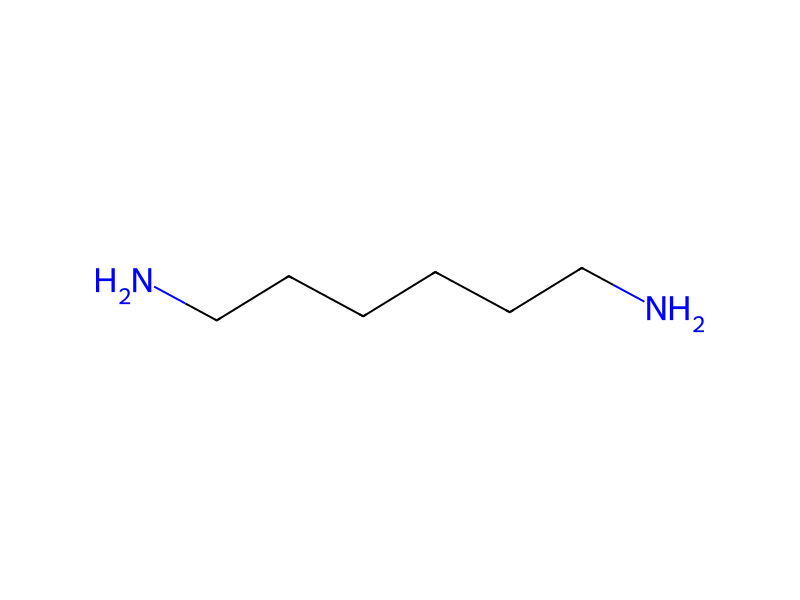
Next, the 1,6-diaminohexane vapor in the condensing chamber 2 was adiabatically expanded, and the introduced base particles were exposed thereto for 3 minutes. Consequently, 1,6-diaminohexane condensed on the surface of the base particles. A polymerization reaction took place between 1,6-diaminohexane condensed on the surface of the base particles and 1,3-phenylenediisocyanate contained therein, forming a film of 1,3 -phenylenediisocyanate-1,6-diaminohexane co-polymer on the surface of the base particles.
Workup
- customA polymerization reaction
Sources & evidence
- ORD record
- ord-7a23127fee5f4dd8a27fc1ead036ae9f
- Source dataset
- uspto-grants-2001_02
- Patent number
- US06194487B1
Linked notes
Loading…