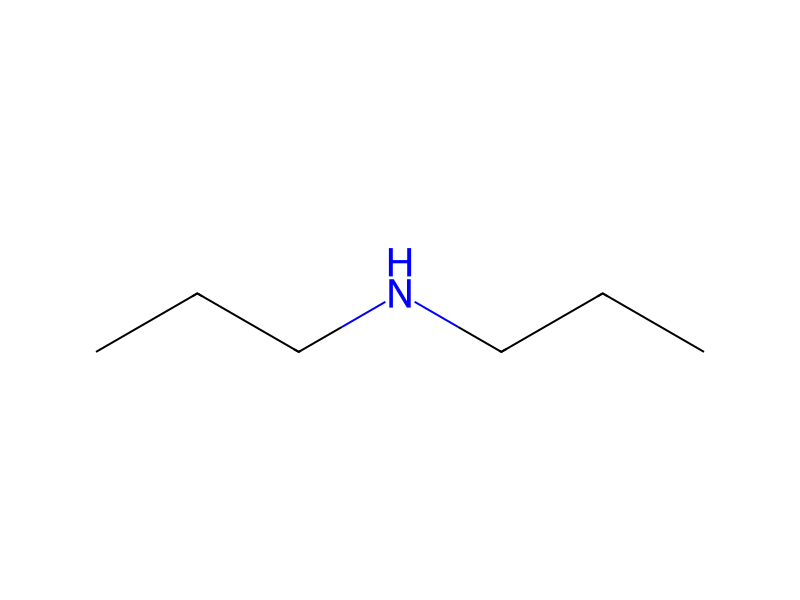
Dipropylamine → HCID 13343516, compound
HRID 637704
Reaction equation

[CH2:1]([NH:4][CH2:5][CH2:6][CH3:7])[CH2:2][CH3:3].[CH3:8][N:9]1[C:13]2[CH:14]=[CH:15][C:16]([CH2:18][CH2:19]Br)=[CH:17][C:12]=2[O:11][C:10]1=[O:21]>O1CCOCC1>[CH3:8][N:9]1[C:13]2[CH:14]=[CH:15][C:16]([CH2:18][CH2:19][N:4]([CH2:5][CH2:6][CH3:7])[CH2:1][CH2:2][CH3:3])=[CH:17][C:12]=2[O:11][C:10]1=[O:21]Participants
4
Reactant 2

Product 1

Reagents, catalysts & solvents 1

Procedure
2.02 g (0.02 mol) of N,N-dipropylamine and 2.56 g (0.01 mol) of 3-methyl-6-(2-bromoethyl)-benzoxazolinone, dissolved beforehand in 30 cm3 of dioxane, were introduced into a 100 cm3 flask with a ground glass neck, fitted with a reflux condenser, and the mixture was then heated under reflux for seventy-two hours, with stirring. After cooling, the reaction mixture was filtered and the filtrate was then evaporated in a water-bath, in vacuo. The residue was then taken up in 30 cm3 of diethylether, the solution was filtered, the filtrate was washed with water and dried over calcium chloride, and a stream of hydrogen chloride was then bubbled. The precipitate formed was filtered off and then recrystallised from ethylacetate, and this gave 2.23 g of the title compound, in the form of the hydrochloride, having a melting point of 150°-152° C.