Reaction equation

[S:1]([OH:5])(O)(=[O:3])=[O:2].[NH2:6][CH:7]([CH2:9][C:10]1[CH:15]=[CH:14][CH:13]=[CH:12][CH:11]=1)[CH3:8].[NH2:16][C@H:17]([C:23](O)=[O:24])[CH2:18][CH2:19][CH2:20][CH2:21][NH2:22].[CH3:26][C@H](N)CC1C=CC=CC=1.[CH3:36][C@H](N)CC1C=CC=CC=1>O>[CH3:8][C@H:7]([NH:6][C:23]([C@@H:17]([NH2:16])[CH2:18][CH2:19][CH2:20][CH2:21][NH2:22])=[O:24])[CH2:9][C:10]1[CH:15]=[CH:14][CH:13]=[CH:12][CH:11]=1.[CH3:26][S:1]([OH:5])(=[O:3])=[O:2].[CH3:36][S:1]([OH:5])(=[O:3])=[O:2]Participants
5
Reactant 3
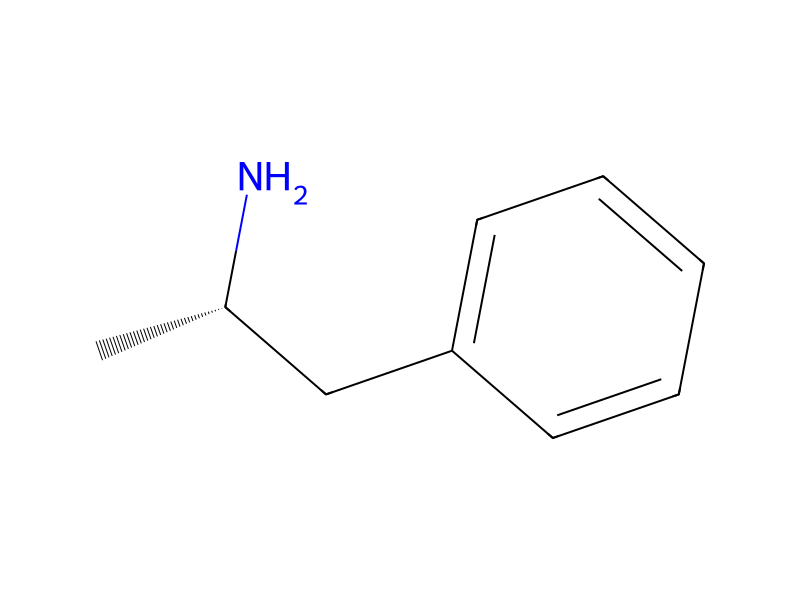


Product 1

Reagents, catalysts & solvents 1

Procedure
Male Sprague-Dawley rats were provided water ad libitum, fasted overnight, and dosed by oral gavage with 1.5, 3, 6, 12, and 60 mg/kg of amphetamine sulfate or L-lysine-d-amphetamine containing the equivalent amounts of d-amphetamine. Concentrations of d-amphetamine were measured by ELISA.
Sources & evidence
- ORD record
- ord-e49b75f9167f4493828b512bab7809bf
- Source dataset
- uspto-grants-2010_04
- Patent number
- US07700561B2
Linked notes
Loading…