HomeMCPWorkbenchSkills
HomeWorkbenchNotificationsMe
llms.txt · MCP GuidePrivacy Policy · Terms of Service · Supportv1.8.0
  1. Home
  2. /Reaction

Chlorotrimethylsilane → Cyclopentyl dimethoxy oxa-3-cyclopentyloxysilane

HRID 6452
Notes
Print preview

Reaction equation

HRID 6452 reaction equation
[CH:1]1([Si:6]([O:11][CH3:12])([O:9][CH3:10])[O:7][CH3:8])[CH2:5][CH2:4][CH2:3][CH2:2]1.O[CH:14]1C[CH2:17][O:16][CH2:15]1.C[Si](C)(C)Cl>C[O-].[Na+]>[CH:1]1([Si:6]([O:11][CH3:12])([O:7][CH3:8])[O:9][CH:10]2[CH2:14][CH2:15][O:16][CH2:17]2)[CH2:2][CH2:3][CH2:4][CH2:5]1
ParticipantsProcedureWorkupSources & evidenceReaction notes

Participants

5

Reactant 3

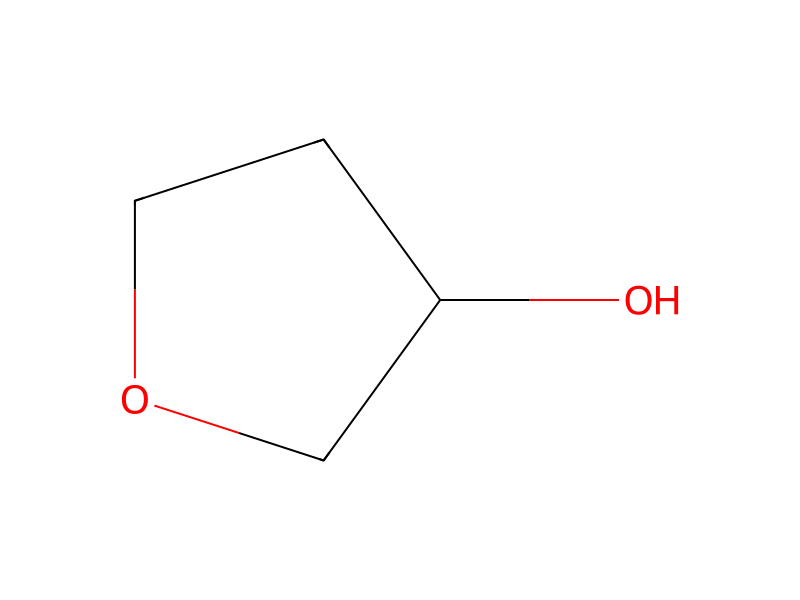
HCID 6397ChlorotrimethylsilaneHCID 99603-Furanol, tetrahydro-HCID 9855701Cyclopentyltrimethoxysilane

Product 1

HCID 19793814Cyclopentyl dimethoxy oxa-3-cyclopentyloxysilaneYield 54%

Reagents, catalysts & solvents 1

HCID 10942334Sodium MethoxideCatalyst

Procedure

In a 100 ml three-neck flask provided with a magnetic stirrer and a reflux condenser were charged 7.7 g (0.0404 mole) of cyclopentyl trimethoxysilane, 35.7 g (0.405 mole) of 3-hydroxy tetrahydrofurane and 53.0 mg (0.98 m mole) of sodium methoxide, which were then reacted with each other in an oil bath of 80° C. for 2 hours under stirring. After cooled, trimethylchlorosilane was added to neutralize the alkali. Then, 5.37 g (0.0218 mole) of cyclopentyl dimethoxy oxa-3-cyclopentyloxysilane were obtained by vacuum distillation. Its structure was confirmed as in Example 1. The yield was 54%.

Workup

  1. customIn a 100 ml three-neck flask provided with a magnetic stirrer and a reflux condenser
  2. customwere then reacted with each other in an oil bath of 80° C. for 2 hours
  3. temperatureAfter cooled

Sources & evidence

ORD record
ord-4f67e89866a749378b2de7b9b7e24fbf
Source dataset
uspto-grants-1993_09
DOI
10.6084/m9.figshare.5104873.v1
Patent number
US05248803

Reaction notes

Loading…

On this pageParticipantsProcedureWorkupSources & evidenceReaction notes