Reaction equation

[N:1]1([CH2:6][CH2:7][CH2:8][NH2:9])[CH:5]=[CH:4][N:3]=[CH:2]1.[C:10]([NH:13][C:14]1[CH:23]=[CH:22][C:17]([S:18](Cl)(=[O:20])=[O:19])=[CH:16][CH:15]=1)(=[O:12])[CH3:11].[OH-].[Na+].ClCCl>O>[N:1]1([CH2:6][CH2:7][CH2:8][NH:9][S:18]([C:17]2[CH:16]=[CH:15][C:14]([NH:13][C:10](=[O:12])[CH3:11])=[CH:23][CH:22]=2)(=[O:20])=[O:19])[CH:5]=[CH:4][N:3]=[CH:2]1Participants
6



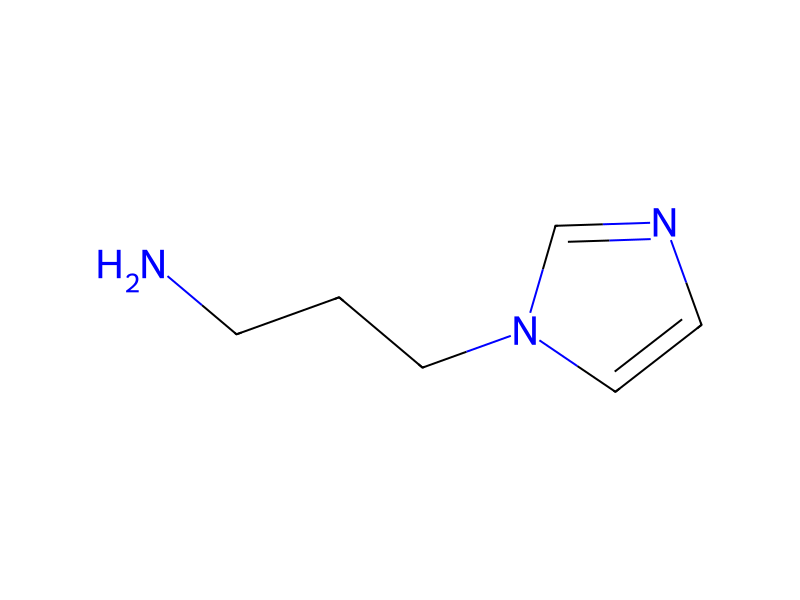


Procedure
A mixture of 1.25 g of 1H-imidazol-1-propanamine in 25 ml of water was stirred at room temperature then 2.34 g of N-acetylsulfanilyl chloride was added and stirring was continued for 20 hours resulting in a clear solution. With the addition of 4 ml of 5N sodium hydroxide the solution turned milky and resulted in the separation of an oil. The addition of dichloromethane resulted in the formation of a suspended precipitate which was collected by filtration and gave 2.67 g of the desired compound as tan crystals, mp 178°-180° C.
Workup
- stirringstirring
- customresulting in a clear solution
- customresulted in the separation of an oil
- customresulted in the formation of a suspended precipitate which
- filtrationwas collected by filtration
Sources & evidence
- ORD record
- ord-7d37fe7c315a4b5f83ebf1ad3974096d
- Source dataset
- uspto-grants-1986_09
- Patent number
- US04610981
Linked notes
Loading…